


Not enough ratings
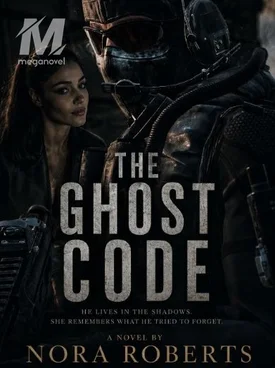
The Ghost Code

By: Nora RobertsOngoing
Language:
English
 16
16
16 Chapters: 31
 views: 427
Read
Add to library
 Report
He watched his family die through a crack in the kitchen wall. At seventeen, Miguel Ramirez learned that survival and innocence never leave the same room together. By sunrise, he buried his parents, his sister, and the boy he used to be. He crossed the border into America with fake papers, borrowed hope, and one promise carved into his bones: one day, he would find the man responsible. Twenty-five years later, Miguel is no longer the boy who hid. He is Michael Reyes, billionaire developer, political donor, husband, father, one of LA's most respected men. But behind the tailored suits and charity galas, he is El Fantasma: the ghost, the invisible architect of an empire powerful enough to move money, governments, and men without leaving fingerprints. Then, at a gala in London, he sees him. Julian Vane. The man who stood in his childhood home and gave the order that destroyed his family is alive, smiling beside ministers and central bank officials like murder was just another investment. Miguel should kill him. Instead, he starts digging and finds something worse than revenge. The massacre in Chiapas wasn't random. His entire life was designed. His rise inside the criminal empire known as The Circle was engineered before he crossed the border. His closest friend, Diego, wasn't sent to save him, he was sent to deliver him. And the man who built him into a weapon was not just his mentor. He was his father. Now Miguel is hunted by the network that made him, betrayed by everyone he trusted, and forced to ask whether the life he built was ever truly his,especially with Elena Vega, sent to watch him, who stayed because she chose him. He survived his enemies. He may not survive his family.
Show more
Share


Overview
Catalog
Chapter 1
PROLOGUE
The Man Who Should Be Dead
London – Present Day
Michael Reyes was in the middle of dismantling a bank when he saw the man who had murdered his family.
No one at the Mayfair gala noticed. That was the point. The room was designed for quiet authority, for conversations that moved beneath the level of music and chandeliers, for the specific register of power that never needed to raise its voice. Crystal caught the light in careful fractions. The string quartet near the staircase played something expensive and forgettable. And Michael stood among thon as though he had been born to it, a glass of champagne in his left hand, his expression attentive to the Home Secretary beside him, his mind somewhere else entirely.
Somewhere else was a server room in a jurisdiction that no longer existed on any public map. Somewhere else was a transfer window of seventy-two seconds. Somewhere else was five hundred million dollars moving through channels so clean that even the people who owned the money would not understand what had happened to it until morning.
His phone vibrated in his jacket pocket. Three short pulses. A signal, not a message. Ghost Code.
He reached for his champagne with his left hand. His right hand moved beneath the edge of the tablecloth. The screen was already unlocked, the authorisation sequence already committed to muscle memory the way other men memorised phone numbers. He approved the transfer.
Half a billion dollars moved in the time it took the Home Secretary to finish a sentence about regulatory freach jurisdictional overlap becomes considerably more manageable once you remove the layers of redundant oversight,” the Home Secretary was saying.
“I agree,” Michael said.
He replaced his glass and turned back to the conversation with his full attention, because men like this one noticed when they stopped being the most important thing in the room. Across the ballroom, near the tall windows, Elena stood in a sweep of dark green silk. She was listening to a Saudi investor and his wife, her shoulder turned slightly toward the room, her expression composed in the way that meant she was reading everything and showing nothing. She did not look toward Michael. She never needed to.
He watched her for two seconds.
Then something shifted.
Not external. Not visible. A change in pressure somewhere beneath the surface of the evening, the way weather sometimes announced itself before the sky did anything at all. Michael held his glass and let the sensation move through him without moving himself. His gaze moved across the room with the same rhythm it always did in unfamiliar environments. Entry points. Clustering patterns. Who stood at an angle to the doors. Who had not moved in twenty minutes. Who was speaking to someone they had not been introduced to.
Near the far end of the gallery, beside a man from the Central Bank who had been at every event like this for the last four years, stood someone Michael had not catalogued yet.
Silver-haired. Sixty, perhaps a few years past it. A posture that came not from wealth but from time spent in rooms where soft voices made hard decisions. He was holding his glass in his left hand, two fingers slightly separated from the others, and he was laughing at something the Central Bank man had said.
Michael’s eyes passed over him.
And stopped.
Not consciously. The recognition did not pass through rational thought. It went somewhere older and faster, the part of the mind that had been memorising faces since before it knew what memory was for. The silver-haired man shifted his weight slightly, and the chandelier light caught the left side of his face at a different angle, and Michael forgot how to breathe.
For a moment he was not in London. He was seventeen years old and the world was made of wood walls and summer heat and the sound of his mother washing dishes in the next room. His father was at the kitchen table fixing the latch that never stayed closed. His sister was asleep on the sofa with one arm hanging off the edge. Everything in the house smelled like the meal they had just finished and the candles that had burned low and the particular kind of quiet that belonged to evenings that did not yet know they were the last of anything.
Then the headlights came through the window.
Three knocks at the door.
And a man standing in the kitchen doorway, silver-haired even then, giving instructions in the calm and reasonable voice of someowith for whom this was simply the work.
Michael came back to London in the space of a single breath.
The Home Secretary was still talking. Someone to his left had laughed at something. The string quartet had shifted into a second movement. The room continued exactly as it had been, untouched, unaware, holding its collective illusion of permanence.
Julian Vane raised his champagne glass and drank.
The name surfaced from a depth Michael had not visited in years. It arrived complete and certain, the way names attached to the worst moments always did. Vane. He had used another name in Chiapas. It did not matter. Miguel Ramirez would have known that face under any name, in any room, in any light.
Twenty-five years.
The man was alive. He was well. He was drinking champagne beside a senior official of one of the most respected financial institutions in the world, and he was laughing, and he had not thought about a village in Mexico for a single second since he left it.
Michael set his glass down. Carefully. Deliberately. With exactly the amount of force he always used.
“You’ve gone quiet,” the Home Secretary said.
“Thinking,” Michael said. “About the jurisdictional overlap.”
The Home Secretary looked pleased and began elaborating. Michael let the words move around him without landing. He reached into his jacket. Not for a weapon. He had not reached for a weapon on instinct in twelve years. Men who reached for weapons on instinct did not survive long enough to build anything worth protecting. He reached for his phone.
He opened a message. Typed one word.
VANE.
Sent it.
Across the room, near the tall windows, Elena’s hand paused on the stem of her glass for a fraction of a second. Then it continued. She said something to the Saudi investor that made his wife smile. She did not look at Michael.
But she had felt it. He knew she had felt it the same way he had always known things about her that she had never needed to say aloud.
Michael looked back at Julian Vane.
The man had moved two steps to his left. He was accepting a fresh drink from a server. He turned slightly, surveying the room the way people did at events like this, not searching, just present, comfortable, utterly at ease within a life that had been constructed from the careful erasure of everything he had done before it.
His gaze moved across the room.
For a half-second, it stopped.
Not on Michael. Not quite. Close enough that Michael felt it. Then it moved on.
The boy who had hidden behind a wood pile in the dark and tried not to breathe had spent twenty-five years becoming a man that Julian Vane would never expect to see again.
Good.
Michael excused himself from the Home Secretary with a phrase that closed the conversation cleanly and left no obligation. He walked toward the corridor beyond the main gallery at the pace of a man who had somewhere to be but no particular urgency about getting there. He did not look back at Vane. He did not need to. He had already done what needed doing.
In the corridor, the air was cooler. A long mirror ran the length of the wall beside the cloakroom. He caught his own reflection without meaning to: forty-two years old, a jaw that carried a thin scar below the left side, a slight irregularity in the way he stoo,d that was not quite a limp but had been in the years immediately after the raid. He looked like Michael Reyes.
He made a call.
It connected on the first ring.
“Yes,” said the voice.
“There are three men in the room tonight,” Michael said. “Not the silver-haired one near the Central Bank board member. The other three. The ones running his security at a social distance. I want them gone before midnight. Quietly. Understood?”
A brief pause.
“Understood.”
He ended the call. He stood in the corridor for exactly four more seconds, looking at his own reflection. Then he went back into the ballroom.
Elena was already moving toward him through the room, unhurried, navigating the clusters of guests with the natural ease of someone who had spent years reading the geography of power. She reached him just before the main entrance to the gallery and stopped beside him, close enough for conversation, far enough for discretion. She looked at the room, not at him.
“How certain?” she said quietly.
“Completely.”
A pause so brief it was barely a pause at all.
“He’s been placed here,” she said. Not a question.
“I know.”
“Then we don’t move tonight.”
“I know that too.” He picked up a fresh glass from a passing server’s tray. “Three men. Before midnight. Not him.”
Elena said nothing for a moment. She was scanning the room the same way he had, reading the same architecture of bodies and attention, arriving at the same conclusions from a slightly different angle. It was what she had always done. It was, he had come to understand over the years, what she had always been built to do.
“Whoever placed him here,” she said, “wanted you to see him.”
“Yes.”
“That means they already know who you are.”
“Yes,” he said again.
She finally looked at him. Her eyes were dark and very steady, and there was nothing in them that resembled panic. There was something that might have been calculation, and beneath that, much further down and very carefully held, something that he recognised as the particular kind of fear that only came from having something real to lose.
“Okay,” she said.
She turned and walked back into the room. She returned to the Saudi investor and his wife without breaking her pace, smiled at something the wife said, and accepted a refill of her champagne.
Michael stood at the edge of the gallery and looked at Julian Vane across the glittering distance of the room.
He had spent twenty-five years learning how to be patient.
He could wait one more night.
Before midnight, three men were dead.
None of them were Julian Vane.
Expand
Next Chapter
Download

Continue Reading on MegaNovel
Scan the code to download the app
TABLE OF CONTENTS
Comments
No Comments
Latest Chapter
The Ghost Code CHAPTER 30
ExposureThe evidence was precise.That was the thing about it, the first thing Miguel noticed when the internal investigation circulated its preliminary findings to the senior level and he was included in the circulation because he was, at this point, still a senior-level member in good standing with full access to the process designed to find what he was being positioned as.He read the preliminary findings at his workstation on the floor above the ninth, on a Wednesday morning, with the same expression he brought to everything he read. The document was twelve pages long, dense with technical language and cross-references. It had been compiled by a team of analysts who reported directly to the woman with the reading glasses, and its tone was clinical, dispassionate, the tone of people who believed they were conducting an objective investigation.The evidence was not overwhelming. It was precise. There was a difference. Overwhelming evidence was the kind that accumulated through prox
 Last Updated : 2026-07-24
The Ghost Code CHAPTER 29
Federal PressureThe pressure came from three directions at once, which was how serious pressure always came, because people who applied it seriously understood that a single point of contact could be managed and multiple simultaneous points could not.The first direction: three accounts at different financial institutions were flagged by compliance systems within a forty-eight-hour window. Not the same institution. Three separate ones, operating in different states, with no visible connection to each other in any public record. The flags were generated internally by each institution's own monitoring systems, which meant the flags were not the result of a coordinated external request but of a coordinated pattern that the three institutions' systems had each independently identified.The pattern the systems had identified was the same across all three. The same signature. The same structural tell. A sequence of transactions that looked, to the automated monitoring algorithms, like the
Last Updated : 2026-07-24The Ghost Code CHAPTER 28
The CrackThe message was four hours late.Not a critical message. A confirmation of a timing window for a transfer that had already been actioned through a different channel. By the time Miguel received it, the information it contained was obsolete, the transfer had closed, the window had passed, and the message was simply a record of something that had already happened. A ghost of communication, echoing through the system after its usefulness had expired.Four hours. That was the gap.Miguel noted it. He did not flag it. He set the message aside in the part of his mind where he kept things that were not yet significant and might never become significant and might, at some later point, combine with other things that were not yet significant to become something else entirely. He had been keeping that particular part of his mind for two years. It was becoming populated. The filing system was organised, precise, each piece waiting in its designated place for the moment when the pattern
Last Updated : 2026-07-24The Ghost Code CHAPTER 27
ElevationThe move came without announcement, which was how everything moved inside The Circle once you reached a certain level.One morning Miguel arrived at the seventh floor and found that his access card now opened a door it had not opened before. The door at the end of the corridor on the floor above the ninth, the one he had passed forty times without attempting it, because the people who went through it moved with the particular quality of people for whom the door was simply a door and not a threshold. They did not look at it. They did not pause before it. They walked through as though it were air.He stood in the corridor for a moment. The morning light was pale through the windows at the far end. The floor was empty at this hour, the workstations dark, the only sound the hum of the ventilation system. He had arrived early intentionally, as he always did, because the early hours were when the building was quietest and his mind was clearest. He had not expected the door to open
Last Updated : 2026-07-24

Explore and read good novels for free
Free access to a vast number of good novels on MegaNovel app. Download the books you like and read anywhere & anytime.
Read books for free on the app