


Not enough ratings
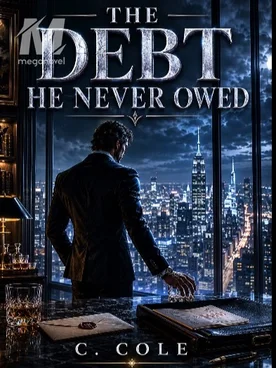
The Debt He Never Owed

By: C. ColeOngoing
Language:
English
 4
4
4 Chapters: 10
 views: 214
Read
Add to library
 Report
He gave them everything; his firm, his patents. His name signed on debts that were never his. He saved a family that erased him, stayed married to a woman who replaced him, and endured a city that buried him quietly. Then his grandfather died and left him an empire. Now Adrian Sloane is done being patient. Some debts don’t get forgiven. They get collected.
Show more
Share


Overview
Catalog
Chapter 1
Chapter one
The Party They Forgot to Invite Him To
“Three years,” Nadia had said, the night he told her what he was going to do. “Three years and we turn this around. I promise you, Adrian.”
He had believed her. That was the part he could never fully explain to himself, not the sacrifice, but the belief.
Adrian Sloane stood on the opposite side of Caldwell’s Merchant Row, hands in his coat pockets, and watched the ribbon come down in front of Hargrove Group’s newly renovated headquarters. The crowd gathered on the steps applauded. A photographer crouched low to get the angle. Nadia stood at the center of it all in a cream blazer, scissors raised, smiling the way she always smiled in public, fully, effortlessly, like nothing in her life had ever cost her anything.
He watched from across the street. He had not been invited to the ribbon-cutting. He had not asked why.
Three years ago that building had been six months from receivership. Adrian knew the precise number because he had been the one to stop the clock. He liquidated his consulting firm’s flagship AI licensing deal, a contract he had spent two years building, the kind that was supposed to be the foundation of everything else, and injected the capital quietly into Hargrove Group’s emergency restructuring. No press release. No announcement. Just a transfer and a signature and the understanding that his marriage meant something.
The building standing before him was proof that the money had worked. It was not proof that anyone remembered where it came from.
He watched until the crowd began to move inside, then turned and walked back to his car.
The Hargrove estate sat behind iron gates in the north quarter of Caldwell, the kind of address that did not need to advertise itself. By eight o’clock the gala was full — council members, finance directors, a handful of journalists invited specifically to write favorable things, and the kind of peripheral wealthy that attend these events to confirm they belong in rooms like this.Adrian had come in Nadia’s car, which meant he arrived alongside her and was introduced twice before they reached the foyer. Both times the person being introduced glanced at him with the brief, polite acknowledgment one gives to a piece of furniture that is not in the way. Both times Nadia moved on before he could say anything.
He found a position near the far edge of the room and stayed there. He accepted a glass of champagne from a passing tray and held it without drinking. He watched the room work itself — the handshakes, the laughter that arrived slightly too fast, the way everyone’s eyes moved constantly to confirm they were still in the right conversation.
Nadia moved through it like she had been designed for it. She was radiant in a way that had nothing to do with what she was wearing. She knew every name, remembered every connection, and gave each person she spoke to the sensation of being the most important person in the room. Adrian had loved that about her once. He was no longer certain what he felt about it now.
Gerald Hargrove called for attention just past nine. He was a broad-shouldered man in his sixties who wore his authority the way some men wore cologne, present in every room before he fully entered it. He raised his glass and the room quieted with the practiced ease of people who understood this was the moment they had come for.
The toast was generous and well-constructed and entirely false. Gerald spoke about the family’s resilience. He spoke about Nadia’s vision and leadership. He spoke about Hargrove Group’s roots and the values that had carried it through its most difficult period. The room listened with the attentive warmth of people hearing a story they already wanted to believe.
He did not mention Adrian. He did not come close to mentioning Adrian. The name of the man who had injected the capital that made the recovery possible did not enter the room at any point during the two and a half minutes that Gerald Hargrove spoke.
The room applauded. Adrian held his glass.
He was still holding it when Phillip Crane spoke up from somewhere to Gerald’s left. Crane was one of those men whose loudness filled whatever space he occupied, who mistook that quality for charm. He made a remark about the evening reminding him of the importance of surrounding yourself with the right people, and then, with the smile of someone who considers cruelty a form of wit, he said that they all remembered what happened to men who overestimated themselves, and wasn’t it a good thing Nadia had the good sense not to.
The people close enough to hear laughed. Some of them glanced toward Adrian without meaning to.
Nadia was standing near the tall windows on the far side of the room, beside Senator Damien Frost. Frost was in his early fifties, composed and silver-templed, the kind of man who gave the impression of having already decided the outcome of every room he entered. He said something low and Nadia tilted her head toward him slightly, a small private smile crossing her face. She did not look toward her husband.
Adrian set his glass down on the nearest side table. He moved through the room quietly, excusing himself without drawing attention, and stepped through the glass door onto the balcony.
The night air came in from the garden below, cool and carrying the faint smell of cut grass. The noise of the party dropped to a muffle behind the glass. He stood at the railing and looked out at the darkened garden, at the geometric hedgerows and the lit pathway that ran toward the far gate, and he waited to feel something he recognized.
What came was not rage. He had half-expected rage, had almost wanted it, because rage at least had direction and heat. What came instead was exhaustion, the specific, heavy kind that accumulates not from a single blow but from years of absorbing smaller ones and telling yourself that patience was the same thing as dignity.
He was not certain, standing there, that it was.
Behind the glass, the party continued. He could see his own reflection in the darkened pane, a man in a suit, standing alone on a balcony at a party that had no use for him.
He looked at it for a moment. Then he turned away from it.
Expand
Next Chapter
Download

Continue Reading on MegaNovel
Scan the code to download the app
TABLE OF CONTENTS
Comments
No Comments
Latest Chapter
The Debt He Never Owed Chapter 10
The Weight of What He Never WantedMagnus spoke for nearly two hours.He was not warm about it. He was not apologetic. He spoke the way Adrian imagined he had built everything in that document case beside the bed, with precision, without waste, covering what needed to be covered in the order it needed to be covered, and not one word beyond that.He told Adrian what Croft Holdings was. Not the surface version, not the version available to anyone who might have known to look, but the actual structure of it, the full weight of what fifty-three years of deliberate, unannounced accumulation looked like when laid out plainly. Mineral extraction contracts on two continents, the specific countries, the specific terms. Sovereign debt instruments, four governments that owed the group money they had borrowed quietly and preferred to keep quiet. Infrastructure development across a corridor Adrian had never heard referred to by that name. And the intelligence networks, which Magnus described last
 Last Updated : 2026-09-02
The Debt He Never Owed Chapter nine
The Empire at the End of a BloodlineThe gate opened before the convoy slowed.That was the detail Adrian registered first, not the scale of the estate or the quality of the stone or the way the approach road curved through landscaped terrain with the unhurried confidence of a path that had been walked by people who owned what was at the end of it. It was the gate, moving on its track before the lead vehicle had reduced speed, as if the house had known they were coming and had simply been waiting for them to arrive. Which, he supposed, it had.Security was present the way good security is present, not absent, but arranged so that its visibility was a choice rather than a necessity. Men at intervals along the approach, still and watchful, dressed in dark that made them part of the landscape in the early evening light. Cameras mounted at angles that covered the road without calling attention to themselves. A perimeter that communicated, to anyone with the relevant experience, that what
Last Updated : 2026-06-03The Debt He Never Owed Chapter eight
The Country Beneath the CountryVelrath did not announce itself.That was the first thing Adrian noticed. He had expected something, some quality of arrival, the way cities tend to assert themselves as you enter them, the skyline rising to make a statement about what kind of place this is and what it thinks of itself. Velrath did not do that. It simply became present, gradually, as the airport road gave way to wider streets and the buildings on either side grew older and more certain of themselves, and by the time he understood he was in the capital he had already been inside it for several minutes.He watched it through the tinted window with the quiet attention of a man who has nothing to do yet but observe.The city’s wealth was not the kind he was used to. Caldwell had money, visible money, new money largely, the kind that expresses itself in glass towers and branded restaurants and the aggressive shimmer of surfaces trying to catch the light. Velrath’s wealth was different in kin
Last Updated : 2026-06-03The Debt He Never Owed Chapter seven
The Title They Did Not Know They Were MockingForty minutes.Adrian knew because there was a clock on the wall above the door, the only thing in the room worth looking at, and he had not looked at it obsessively but he had looked at it. The minute hand moved with the faint mechanical tick of institutional clocks everywhere, the kind designed to make waiting feel administrative rather than punitive. He sat with his hands in his lap and let the time pass and did not spend it in the way anxious men spend enforced waiting, rehearsing arguments or cataloguing grievances. He simply waited, because there was nothing else available, and because the quality of his patience had been tested by considerably more than this over the past several years.At the forty-minute mark the door opened.Four men came in first. Dark suits, no insignia, moving in a formation that was not aggressive — there was nothing threatening in the way they entered, but was unmistakably deliberate. The kind of formation
Last Updated : 2026-06-03
You may also like


Explore and read good novels for free
Free access to a vast number of good novels on MegaNovel app. Download the books you like and read anywhere & anytime.
Read books for free on the app