


Not enough ratings
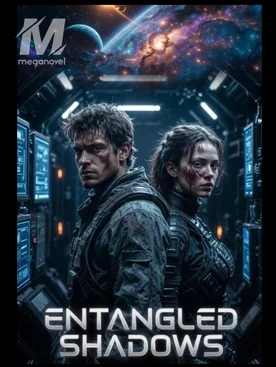
ENTANGLED SHADOWS

By: Keera Noire Ongoing
Language:
English
 16
16
16 Chapters: 7
 views: 966
Read
Add to library
 Report
He thought the war was over. One anonymous message proves it never truly ended. When a dormant doomsday protocol Reckoning Wave.awakens in the forbidden Nepharis Void, Rhen and Kessa are dragged back into the void they fought to escape. Deep in a forsaken black-site station, they confront the ultimate betrayal: a perfect clone of Kessa hosting the uploaded consciousness of her former mentor, Director Varn. With only ninety-six hours before quantum entanglement collapses across the galaxystranding civilizations in eternal isolation they must face the mirror of what Kessa could have become. In a labyrinth of shifting corridors, psychological traps, and self-destructing truths, peace demands one final, unforgiving price: destroy the shadow self, or watch everything they saved burn.
Show more
Share


Overview
Catalog
Chapter 1
Chapter 1
The Canister
The spaceport on Elysara Prime smelled of ozone, fried street food, and the faint metallic tang of recycled air. I had just stepped off the shuttle from the orbital ring, carrying nothing but a duffel bag and the quiet anticipation of ten days with no missions, no briefings, no blood on my hands. Just sun, salt water, and the kind of silence that doesn’t come with a body count.
Customs took one look at my passport and waved me toward the premium lane. I’d been coming here every year for the last four; the resort on the southern archipelago knew me by name, kept the same cabana ready, and never asked questions about the faint scars on my forearms or why I always paid in untraceable credit chits. Routine. Comfortable. Almost peaceful.
That lasted exactly seven minutes.
Two officers in pale-green uniforms intercepted me before I reached the baggage claim. No pleasantries, no explanation. Just firm hands on my elbows steering me through a side door marked “Secondary Screening.” The room beyond was small, white, and cold. A single metal table, two chairs, a wall-mounted camera that watched without blinking.
“Bag on the table,” the taller officer said. His partner stood by the door, hand resting on the grip of a stun baton.
I set the duffel down slowly. “I’ve cleared customs here four times in the last three years. Same passport, same resort booking. Is there a problem?”
They didn’t answer. The taller one unzipped the bag and began removing items with practiced efficiency: folded shirts, swim trunks, sunscreen, a paperback novel I’d bought at the orbital bookstore because it looked mindless. Then he reached the bottom and paused.
His gloved fingers closed around something I had never packed.
A brushed-steel canister, thirty centimeters long, hexagonal cross-section, no markings except a thin red band around the middle. Heavy. Sealed. Cold to the touch even through the glove.
I stared at it the same way they did.
“That’s not mine,” I said.
The officers exchanged a glance. The one by the door tapped his earpiece. “Control, Holding Three. We have a positive on restricted materials. Request immediate backup.”
The taller officer set the canister on the table like it might explode. “Step back, citizen.”
I took one step back. My mind was already racing through possibilities—frame job, mistaken identity, random search gone wrong—but none of them explained how a device I had never seen ended up in my luggage. I had packed the bag myself on the orbital ring, locked it, carried it through three security arches that hadn’t beeped once.
The door exploded inward.
Not figuratively. The reinforced panel buckled under a single kick, hinges screaming as it slammed against the wall. A figure in matte-black tactical cloth spun through the opening, low and fast. The first officer reached for his sidearm and took a precise elbow to the temple; he dropped without a sound. The second swung his baton in a wide arc and caught only air—the intruder was already inside his guard, driving a knee into his solar plexus, following with a chop to the neck that put him on the floor beside his partner.
The entire sequence took maybe three seconds.
The intruder straightened. Female, average height, lean build. Face concealed by a smooth black mask that covered everything but her eyes—dark, sharp, unreadable. A compact backpack rode high between her shoulder blades.
Those eyes flicked to me, assessed, dismissed any immediate threat. Then they dropped to the canister.
The backpack unfolded.
I don’t have a better word for it. Segments detached, unfolded, reconfigured with soft mechanical clicks into a spider-like drone the size of a large dog. Eight articulated legs, matte black to match the mask, compound lenses glowing faint amber. It scuttled down her back, crossed the floor in a blur, and snatched the canister in two delicate manipulators. Then it reversed the process—legs folding, segments locking—until it was a backpack again, canister secured inside.
The woman turned to me.
Her voice came through a modulator, low and genderless. “How long have you had it?”
“I’ve never seen that thing in my life.”
She stepped closer. I could see my reflection fractured across the lenses of her mask.
“Don’t lie. People who lie about this die slowly.”
“I’m not lying. I landed twenty minutes ago. That canister was not in my bag when I packed it.”
She studied me for a long second. Behind the mask I could almost feel her weighing options: kill the witness, recruit the witness, abandon the witness.
The camera in the corner sparked and went dark. She’d fried it on entry.
Sirens began to wail somewhere deeper in the terminal—distant but approaching.
She made her decision.
“You’re coming with me.”
“I’m not—”
She moved faster than I could track. One moment she was two meters away; the next her gloved hand was clamped around my wrist, pressure points singing with pain. Not enough to break anything, just enough to remind me she could.
“You don’t have a choice. If they catch you with that device on the manifest, you’ll disappear into a black-site cell for the rest of your very short life. If my people think you’re compromised, same result. The only way you stay breathing is if you stick with me until I figure out what you know.”
“I keep telling you, I know nothing.”
“Then you’d better hope you’re a fast learner.”
She released my wrist and was already moving toward the ruined door. I hesitated half a heartbeat—old instincts screaming to fight, to run the other direction, to salvage the vacation that was now in flaming ruins.
But the sirens were louder, and armed response teams would be here in under a minute.
I followed her.
We burst into a service corridor lined with humming power conduits and rolling luggage carts. She led at a sprint, guiding me left, then right, then down a narrow maintenance stairwell that smelled of cleaning chemicals. Halfway down she slapped a small disc against the wall; a sharp crack and puff of smoke sealed the door behind us with quick-setting foam.
At the bottom we emerged into the baggage-handling level—conveyor belts, robotic arms, stacks of suitcases waiting forlornly to be loaded onto carousels that would never turn for them today. Alarms blared overhead, red strobes painting everything in pulses of blood-colored light.
She vaulted a belt without breaking stride. I followed, lungs already burning. I stay in shape—have to, in my line of work—but she moved like someone born to this kind of chaos.
We reached a freight elevator. She pried the doors open with bare hands, revealing an empty shaft dropping four stories. A service ladder ran down one wall.
“Down,” she ordered.
I started climbing. She came after me, pulling the doors shut above us with a magnetic clamp from her belt. Darkness swallowed us except for the faint glow of her mask lenses.
Halfway down she spoke again, voice quieter now that the alarms were muffled.
“My associates needed the canister through customs without triggering the deep scanners. You were the perfect mule—frequent traveler, clean record, no criminal flags. They slipped it into your bag during the orbital transfer. Standard play.”
“Your associates sound charming.”
“They’re professionals. I’m the one who draws the line at collateral corpses.”
We reached the bottom. She forced the lower doors and we stepped into an underground parking garage reserved for port staff—rows of electric carts, a few private skimmers, dim sodium lighting.
She led me to a nondescript gray van with no windows in the rear. The side door slid open at her approach. Inside: two bench seats, equipment racks, a small drone cradle where the spider-backpack was already nesting and unpacking the canister onto a padded workbench.
“Get in.”
I climbed aboard. The door sealed behind me with a soft hiss. The van lifted on silent mag-lev cushions and glided toward an exit ramp before I’d even found a seat belt.
Through the front windshield I watched the spaceport recede. Security skimmers were already swarming the passenger levels, floodlights sweeping the tarmac. None of them looked down here yet.
The woman pulled off her mask.
Short black hair, damp with sweat. Olive skin, sharp cheekbones, a thin scar running from her left ear to the corner of her mouth. Mid-thirties, maybe. Eyes that had seen too much and slept too little.
She tossed the mask onto the dashboard and glanced at me in the rear-view mirror.
“Name’s Kessa. You?”
I considered lying, discarded the idea. If she wanted me dead I already would be.
“Rhen.”
“Rhen,” she repeated, testing it. “You’re not just a tourist, Rhen. Your pulse stayed steady when I dropped those guards. Most civilians would’ve pissed themselves.”
“I’ve had training.”
“What kind?”
“The kind that used to pay better than vacation planning.”
She gave a short, humorless laugh. “Aren’t we all running from something.”
The van merged into surface traffic on the coastal highway. Elysara’s twin suns were setting over the ocean, turning the water into molten copper. Under any other circumstances it would have been beautiful.
Kessa activated privacy glass between the cab and the rear compartment. I was alone with the spider-drone and the canister.
The drone extended two delicate arms and began running scans—spectrographic, radiological, biometric. Holographic readouts flickered in the air above the workbench. Whatever was inside the canister, it was sophisticated enough to make the drone pause twice and recalibrate.
I leaned forward. “Mind telling me what exactly I almost got arrested for smuggling?”
Kessa’s voice came over an intercom. “Short version: it’s a quantum entanglement relay. Long version: it’s the trigger for a cascading system failure across every major orbital defense grid in the sector.”
I felt the blood drain from my face.
“You’re saying—”
“If that device reaches its destination, someone can black out communications, navigation, and weapons targeting for every military and civilian platform from here to the Coreward Rim. Simultaneously. Irreversibly for at least seventy-two hours. In that window, entire fleets could be redirected, stations boarded, planets invaded. Pick your nightmare.”
“And your associates want that to happen.”
“My former associates,” she corrected. “I was sent to retrieve the canister after the mule play went sideways. Orders were to eliminate the mule if necessary. I improvised.”
“Why not just let security confiscate it?”
“Because port security answers to the local governor. The governor is quietly funded by the same people who built the device. It would have disappeared into evidence for twelve hours, then quietly walked out the back door. My way was faster.”
The van banked inland, leaving the coastal lights behind. We were heading into the jungle plateau that covered most of the continent’s interior—dense, unmonitored, perfect for anyone who didn’t want to be found.
I rubbed my temples. “So what happens now?”
“Now we get off-grid. I contact the only people I still trust, figure out who sold us out, and decide whether we destroy the device or use it as leverage to burn the entire network to the ground.”
“And me?”
“You’re still breathing, which makes you either an asset or a liability. Convince me you’re the former and you might get to see your resort again someday.”
The spider-drone finished its scan. A soft chime. Kessa pulled the van onto a narrow dirt track that disappeared between towering fern-trees. The privacy glass cleared; she looked back at me.
“One more thing, Rhen. The people who planted that canister on you—they’re thorough. By now they know the retrieval went noisy. They’ll assume the mule talked. They’ll want you erased, quietly and permanently.”
“Great,” I said. “I pick the one year I try to relax.”
Kessa almost smiled. “Welcome to the war you didn’t know you were already fighting.”
The track ended at a small clearing. Overhead, the first stars were coming out. The van settled, engines whispering into silence.
Kessa opened the rear door and gestured me out.
“From this point we move on foot. Bring whatever you need from your bag. We won’t be coming back.”
I stepped into the humid night air, duffel slung over my shoulder, the ruined vacation fading behind me like a dream I could no longer afford to remember.
Somewhere in the dark, insects began to sing.
Somewhere farther away, people who used innocent travelers as disposable couriers were already planning their next move.
And somewhere inside that canister, the fate of half the galaxy ticked quietly, waiting for someone to decide what came next.
I looked at Kessa. She looked at me.
Neither of us said it aloud, but we both knew:
The holiday was over.
The real work had just begun.
Expand
Next Chapter
Download

Continue Reading on MegaNovel
Scan the code to download the app
TABLE OF CONTENTS
Comments
No Comments
Latest Chapter
ENTANGLED SHADOWS Chapter 7
The Reckoning WaveThe moon was called Serene Reach, a forgotten pearl in the Outer Volumes where the oceans glowed faint turquoise at night from bioluminescent plankton, and the only sounds were waves on black sand and the occasional cry of seabirds. We had been there for three months—longer than anywhere else since the war ended. Long enough to build routines. Long enough to almost believe the quiet was permanent.I woke before dawn, as always. Kessa was already up, standing on the balcony of our cliffside cabin, wrapped in a thin blanket, watching the horizon where the first sun would rise. Her silhouette was sharp against the pre-dawn indigo, hair loose and wild from sleep.I joined her without speaking. We had learned silence was sometimes better than words.She leaned back against me when I wrapped arms around her waist. Her skin was warm despite the cool breeze.“Dream?” I asked quietly.“Memory,” she corrected. “Varn’s voice. Telling me I’d come back.”I tightened my hold. “Y
 Last Updated : 2026-01-11
ENTANGLED SHADOWS Chapter 6
The Long ShadowThe liner *Stellar Drift* was everything the war hadn’t been: soft lighting, live music in the lounges, passengers in vacation silks sipping cocktails under simulated starlight. Kessa and I had boarded at Port Meridian under false names, carrying nothing but two small duffels and the kind of bone-deep exhaustion that no shore leave could fix in a week.We had cabins on the promenade deck—adjoining, doors left unlocked between them. For the first three days we did what civilians do: slept twelve hours straight, ate real food, walked the observation ring hand in hand like any other couple escaping the grind. No one looked twice at us. No alarms. No gunfire.It felt alien.On the fourth day, Kessa found me in the gym at 0400 ship time, pounding a heavy bag until my knuckles bled through the wraps.“You’re going to break your hands,” she said from the doorway.“Better than breaking my head thinking.”She stepped in, closed the door. “Nightmares?”“Memories.” I stopped, bre
Last Updated : 2026-01-11ENTANGLED SHADOWS Chapter 5
Ashes and AftermathThe *Ebon Sparrow* hung in the void like a black needle against the starfield, cloaked and silent, three light-days out from the smoldering ruins of Obsidian Keep. For forty-eight hours we had done nothing but watch the sector unravel.Every major feed carried the footage Crab had uploaded in the final seconds before the fortress detonated: the Directorate’s faces, their voices, their plans laid bare. Names that had been myths—admirals, CEOs, intelligence chiefs—were now splashed across emergency broadcasts. Arrest warrants flew faster than light. Bank accounts frozen. Private fleets seized at dock. Entire governments teetered as compromised ministers fled or were dragged from offices in restraints.But wars do not end when the head is cut off. They convulse.Concordance cells—dozens, maybe hundreds—went dark or went loud. Some surrendered. Most fought. Suicide charges on Federation outposts. Assassinations of investigators. Sabotage of orbital infrastructure. Thre
Last Updated : 2026-01-11ENTANGLED SHADOWS Chapter 4
Ghosts in the VoidThe *Driftwind* ran dark for three days.No running lights, no transponder, minimal emissions. Captain Hale plotted a wandering course through the nebula fringes of the Elysara Sector dense gas clouds that scattered sensors and hid us from long-range scans. Inside the ship, the mood was funeral-quiet. Crew spoke in murmurs, if at all. The newsfeeds we dared to skim painted a picture none of us wanted to look at for long.Calyx Station destroyed. Over four hundred thousand confirmed dead, countless more missing in the debris field. Official story: catastrophic fusion cascade, cause under investigation. Unofficial channels screamed the truth everyone was afraid to say aloud someone had deliberately overloaded the cores.Markets were still frozen. Trillions in wealth evaporated overnight. Governments declared emergencies. Fleets mobilized. Fingers pointed everywhere: terrorism, corporate sabotage, foreign powers. No one named the Concordance publicly. They were too dee
Last Updated : 2026-01-11
You may also like


related novels
Explore and read good novels for free
Free access to a vast number of good novels on MegaNovel app. Download the books you like and read anywhere & anytime.
Read books for free on the app