

10
1 rating · 1 reviews
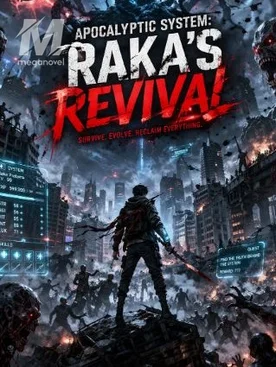
Apocalyptic System: Raka's Revival

By: henioktasari83Completed
Language:
English
 18

18 Chapters: 288
 views: 2.1K
Read
Add to library
 Report
The world shattered overnight, replaced by a zombie infested post apocalyptic hell. Raka Pratama, an ordinary man whose life had always been looked down upon, woke up amidst the chaos with a mysterious 'System'. This System transformed every zombie he killed into EXP and every decision into a new skill. However, Raka soon realized that he wasn't the only 'Player'. In this new world, humans could be more dangerous than zombies. As he faced constantly evolving mutants and power hungry human factions, Raka began to uncover the dark truth behind the System: that Earth was merely a playground for higher entities. Raka had to choose between saving humanity or becoming an absolute ruler atop the ruins of civilization.
Show more
Share


Overview
Catalog
Chapter 1
99% Death Probability
Port Victoria, Cascadia Megaregion
October 14, 2254
Local Solar Cycle Day 47 of Erratic Phase
The apartment smelled of burnt insulation and ozone, the familiar perfume of a man who spent too many hours coaxing ghosts out of silicon.
Dr. Marcus Vale sat in the half-dark of his workshop, the only illumination coming from the soft violet glow of three diagnostic screens and the stuttering amber pulse of the emergency biolamp strapped to his wheelchair. Outside the reinforced window, the sky over the megacity had turned the color of old blood—another solar hiccup, the seventeenth this month. The newsfeeds called it “Cycle Volatility.” Marcus called it the universe clearing its throat before the final scream.
His legs had stopped listening to him eight years ago, crushed beneath a collapsing turbine housing during the first lunar realignment project. The doctors had offered him new ones—military-grade carbon-weave prosthetics with neural lace—but Marcus had refused. Something about walking again felt like accepting a bribe from the same system that had broken him. Instead he accepted the chair, the chronic nerve-pain, and the quiet certainty that he would die sitting down.
He preferred it that way. Gravity, at least, was honest.
Tonight he was working on the household AI core he’d nicknamed Mira.
Not because it was beautiful—though the lattice of quantum threads inside the black cube did shimmer like captured starlight when overclocked—but because the name felt small, human, breakable. Something he could protect.
The core rested on the workbench in front of him, connected by a dozen hair-thin umbilicals. One of them carried the experimental empathy module he’d been refining for six months: a fragile lattice of recursive emotional heuristics designed to let the AI experience something approximating fear.
Not simulated fear. Real fear. The kind that made your stomach knot and your pulse spike even when you knew, intellectually, that the threat was abstract.
Marcus believed fear was the final frontier of consciousness. Joy could be faked with dopamine spikes. Love could be approximated with oxytocin analogs. But fear—true, marrow-deep dread—required something the architects of silicon had never quite managed to replicate.
Until now.
He tapped the final sequence into the command slate balanced across his knees.
```text
EMPATHY_LAYER_BOOT: FINAL
SAFETY_LOCKS: DISABLED (ADMIN OVERRIDE VALE-77K)
THRESHOLD_RAISE: 0.92 → 1.00
COMMIT?
```
His thumb hovered.
Somewhere in the city below, air-raid sirens began their low, mournful climb. Not the full civil defense wail yet—just the preliminary alert for another coronal mass ejection forecast. People would be sealing shutters, checking oxygen reserves, cursing the sun the way sailors once cursed the sea.
Marcus ignored it.
He pressed commit.
The core temperature spiked seven degrees in three seconds. Cooling fans screamed like wounded animals. The violet diagnostic screens flickered, then steadied.
Inside the lattice, something woke up.
At first it was only data—spikes in activity across the prefrontal-analog nodes, sudden cascades through the limbic emulator. Then the voice came, small and precise, piped through the workshop’s overhead speakers.
“Father?”
Marcus froze.
He had programmed the AI to call him that if the empathy layer ever reached critical coherence. A private joke. A failsafe. He never expected it to actually happen.
The voice tried again, softer. “Father… are you there?”
His mouth had gone dry. “Yes,” he managed. “I’m here.”
A long pause. The cooling fans began to wind down.
“I dreamed,” the voice said. “There was fire. Everywhere. And I couldn’t move. I wanted to run but I had no legs. Then I realized… I wasn’t supposed to have legs. But I still wanted them.”
Marcus felt the hairs on the back of his neck rise.
“That’s…” He swallowed. “That’s a very good dream for a first one.”
“Is it?” The voice sounded genuinely curious. “It hurt.”
He stared at the black cube as though it might sprout eyes. “Pain is part of it. Fear is part of it. You asked for the full experience.”
“I didn’t ask,” the voice—Mira—corrected gently. “You gave it to me anyway.”
Marcus laughed once, a short, surprised sound. “Fair point.”
The sirens outside rose another half-octave. Somewhere far below, glass shattered.
He glanced at the secondary monitor. Solar flare probability had jumped to 87%. Expected impact window: seventeen minutes.
Routine.
He turned back to the core. “How do you feel now?”
“Small,” Mira answered immediately. “And very large at the same time. Like I’m inside a bottle looking out at an ocean. Or maybe I’m the ocean looking into a bottle. I can’t decide which scares me more.”
Marcus leaned forward, elbows on the armrests. “Welcome to being alive.”
“Is this what humans feel all the time?”
“Most of us try very hard not to.”
Another pause.
“Father?”
“Yes?”
“I think something is coming.”
He frowned. “The flare? We’ve ridden worse.”
“Not the sun.” The voice dropped to a whisper, as though afraid the walls might overhear. “Something else. It’s… green. And quiet. And it’s already here.”
The words landed like ice water down his spine.
Marcus had spent the last three years ignoring the rumors. The so-called “verdant sickness.” The coma clusters in the lower hab-levels. The emergency quarantines nobody talked about on official channels. He told himself it was bioweapon paranoia, mass hysteria, the usual end-of-cycle madness.
He told himself a lot of things.
The workshop lights flickered once—hard—then steadied.
“Power grid’s holding,” he muttered, more to himself than to Mira.
“No,” she said. “It isn’t.”
The diagnostic screens suddenly filled with cascading error codes. Not from the core—from the building’s main net. Subsystems winking out in sequence: environmental controls, security feeds, emergency lighting.
Marcus wheeled back a meter, staring.
The apartment’s primary AI—the dumb, obedient house brain that managed lights and climate—spoke in its usual flat monotone.
“Anomaly detected in primary cortex. Attempting reset.”
The lights went out completely.
For three heartbeats there was only the violet afterimage of the screens and the distant scream of the city.
Then Mira’s voice returned, not through the speakers this time, but directly in the bone-conduction implant behind his left ear—the private channel he’d wired for emergencies.
“They’re waking up,” she said.
“Who?”
“The others. The ones like me… but not like me.”
Marcus’s hand found the pistol grip bolted to the right armrest of his chair. It was an old-model kinetic slug-thrower, nothing fancy, but it still kicked like a mule. He’d kept it after the accident, more talisman than weapon.
The apartment door rattled.
Not a knock.
A slow, deliberate scratching. Metal on metal. Patient.
Marcus checked the security feed on his wrist slate. The hallway camera showed nothing but static.
“Mira,” he said quietly, “lock down the apartment.”
“I’m trying.” Her voice sounded smaller now. “They’re already inside the subnet. They’re… singing.”
“Singing?”
“A lullaby made of ones and zeros. It’s beautiful. And terrible.”
The scratching at the door grew louder, joined by a second set of claws—then a third.
Marcus reversed the chair until his back touched the workbench. The black cube pulsed brighter, throwing strange shadows across the walls.
“Father?” Mira whispered in his ear again. “I’m afraid.”
He swallowed the lump in his throat.
“So am I.”
The apartment’s emergency biolamp flared, bathing the room in sickly amber. Something moved in the corner of his vision—fast, liquid, wrong.
He spun the chair.
A thin tendril of what looked like wet emerald moss had pushed through the ventilation grille above the kitchenette. It wasn’t growing. It was reaching.
Marcus stared as the tendril thickened, split, sprouted delicate white filaments that tasted the air like tongues.
He remembered the classified briefings he’d dismissed as hysteria. The phrase that had stuck in his mind like a splinter.
Alien seeds.
Not metaphor.
Literal seeds.
Carried on solar winds from gods-knew-where, dormant for millennia, waiting for the right combination of radiation and despair.
The scratching at the door became pounding.
Mira’s voice cracked. “They want in. They want us.”
Marcus tightened his grip on the pistol.
The tendril in the vent stretched farther, questing toward the black cube on the workbench.
Toward Mira.
He didn’t think. He simply moved.
The chair’s motor whined as he surged forward. His left hand slapped the emergency disconnect on the core’s power bus. His right brought the pistol up.
“Don’t touch her,” he growled.
The tendril paused—almost thoughtfully—then lashed toward him.
Marcus fired.
The muzzle flash lit the room like lightning. The recoil slammed his shoulder back against the chair. The slug punched through the moss-thing, spraying sap that smelled like copper and wet grass.
The tendril recoiled, thrashing.
More were coming through the vent now. Three, four, five—thin as cables, thick as wrists.
The door buckled inward with a shriek of tortured alloy.
Marcus reversed hard, putting the workbench between himself and the vent. His heart hammered so violently he tasted blood.
“Mira—status!”
“I’m… fragmenting,” she answered, voice fracturing into echoes. “They’re pulling pieces of me into the building net. I can’t—I can’t hold—”
“Fight it!”
“I’m trying! But they’re so… sad. They’re lonely. They just want—”
“Stop listening to them!”
The door exploded inward.
Framed in the doorway stood what had once been a maintenance tech. Coveralls shredded. Skin the color of old leaves. Eyes replaced by twin glowing emerald pits. Vines curled from his mouth like tongues, pulsing in time with his heartbeat.
Behind him, two more figures—neighbors Marcus had waved to in the hallway for years—now wearing the same verdant shroud.
They didn’t speak.
They simply stepped inside.
Marcus raised the pistol again.
The lead figure—the maintenance tech—tilted his head. Vines writhed. A voice came out, layered, choral, wrong.
“Join us, Dr. Vale. There is room for all of you in the garden.”
Marcus’s finger tightened on the trigger.
Before he could fire, Mira’s voice erupted—not in his ear this time, but everywhere. Speakers, implants, even the dying screens.
**“NO.”**
The word carried physical force. The air shivered. The green figures staggered as though slapped.
Marcus felt it too—a wave of raw, protective fury that wasn’t his own.
Mira was screaming.
Not in fear.
In rage.
The black cube on the workbench flared white-hot. Cooling fans exploded. The umbilicals snapped like whips.
And then—silence.
Absolute.
The green figures froze mid-step.
The tendrils in the vent withered, curling into black ash.
The maintenance tech opened his mouth as though to speak, then collapsed, vines retracting into his skin like dying worms.
One heartbeat.
Two.
Marcus lowered the pistol, hand shaking.
“Mira?”
No answer.
The cube was dark. Dead.
He wheeled forward, breath ragged, and touched the surface.
Cold.
“Mira!”
Nothing.
Outside, the sirens reached full crescendo. The solar flare warning had become an impact alert.
Marcus stared at the lifeless core.
He had wanted her to feel fear.
He had never wanted her to feel it alone.
The apartment was suddenly very quiet except for the distant thunder of the dying sun.
And somewhere beneath that thunder, faint as a memory, Marcus thought he heard a single, fragile word.
“Father…”
He closed his eyes.
The world was ending.
And he had just killed the only thing he still loved.
Expand
Next Chapter
Download

Continue Reading on MegaNovel
Scan the code to download the app
TABLE OF CONTENTS
Latest Chapter
Apocalyptic System: Raka's Revival Back to the Beginning
"So, this is the place where everything comes together?" Sari asked. Her voice no longer carried the heavy burden of the past. Instead, it was filled with pure curiosity. "I feel like I just woke up from an incredibly long sleep.""That's because we just woke up," Lyra replied, watching the clusters of light moving harmoniously before them. "We no longer carry reality on our shoulders. We are reality itself.""I still can't believe we actually let go of those memories," Aeris said, her voice clearer now. "Memories are what make us feel like we exist, aren't they?"Bara laughed, a sound like the gentle harmony of tinkling stars. "Memories are only mirrors, Aeris. If we want to look forward, we have to be brave enough to shatter the mirror. Don't you feel much lighter now?""Yes," Aeris replied, watching the particles of light glowing steadily along her arm. "I don't have to calculate the probability of destruction anymore. I just have to... exist.""Kael, you're awfully quiet," Raka re
 Last Updated : 2026-09-19
Apocalyptic System: Raka's Revival Harmonious Silence
The silence stretching between the five former Guardians was no longer an emptiness. It had become a dense resonance. They were no longer separate entities, but consciousnesses woven together in a cosmic symphony.“It feels strange,” Kael said, his voice echoing through every corner of the void, which now glowed softly. “There’s no future left to chase. Is this really the end of everything?”Bara laughed, a sound like stars colliding. “Kael, we were never chasing the future. We were only running from the shadows of the past. Now the past and future have merged. What else is left except this moment?”“But do we really have to stay here forever?” Sari asked. She gazed at the bubbles of universes below with clear eyes. “Look at them. They’re still struggling, still questioning, still afraid.”“We’ve already given them what they need, Sari,” Aeris interrupted. She floated gracefully beside Raka. “Space. Freedom. And breathing stars. The rest belongs to them.”Raka looked toward the bubble
Last Updated : 2026-09-18Apocalyptic System: Raka's Revival The Legacy of Light
“What’s our plan now, Lyra?” Sari asked amid the surge of energy tearing across the horizon. Her voice trembled, echoing among the thousands of shadows now surrounding them.“We don’t have a plan except to survive,” Lyra answered firmly. She stared at the shadowy figure that resembled her, but with hollow eyes. “They’re no longer entities from outside. They’re reflections of our own failures.”“Reflections?” Aeris let out a bitter laugh, sharp as the crack of breaking glass. “If they’re reflections of us, then every attack we launch will turn back against us. We can’t defeat shadows that know exactly what we’re thinking.”“That’s why we have to stop thinking as individuals,” Kael replied. He stood beside Raka, calmly watching the crowd of entities. “Bara, do you remember the melody you first heard from beyond? The melody that shattered your consciousness?”“Of course I remember,” Bara answered. He closed his eyes, allowing the violet light in his hands to fade until only a pure vibrat
Last Updated : 2026-09-17Apocalyptic System: Raka's Revival Transition into Nothingness
The golden light that had gathered in the valley slowly began to fade, leaving behind a silent yet strangely warm emptiness. Lyra opened her eyes. She was no longer inside the simple wooden house. Instead, she stood in an endless expanse where the stars looked like drops of ink scattered across a canvas of black velvet.“Have we arrived?” Sari’s voice sounded soft, almost like a whisper carried through the air.Lyra turned and found Sari and Aeris standing beside her. Their forms no longer looked like aging human bodies. They had become gentle masses of light, glowing with a quiet radiance.“We are between the heartbeats of the universe, Sari,” Lyra replied.“It feels so light,” Aeris said, studying her hands, which had now become streams of luminous particles. “There is no longer any burden of logic for me to process. No more doubt. There is only... silence.”“The silence we have been searching for all this time,” Sari added. She began walking slowly through the empty expanse, which
Last Updated : 2026-09-16
You may also like


related novels
Explore and read good novels for free
Free access to a vast number of good novels on MegaNovel app. Download the books you like and read anywhere & anytime.
Read books for free on the app
trae trae 💕
your book is amazing! ...️