


Not enough ratings
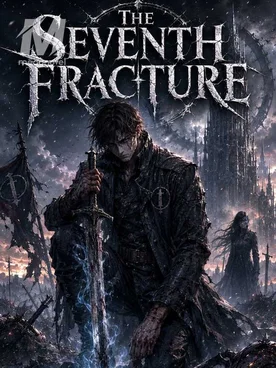
THE SEVENTH FRACTURE

By: Cael Voss Completed
Language:
English
 18
18
18 Chapters: 47
 views: 724
Read
Add to library
 Report
147 monsters. Kaelen Venn remembers every single one of their final apologies. Not out of sentimentality, but because most of them used to be human. In the haunting world of Elegy’s Cradle, ignored grief doesn't just fade away—it transforms. It morphs into hollow, hungering beasts that used to have names. Kaelen is a Grave-Warden. His job? Hunt these creatures down before they spread. His second, unwritten job? Make sure he doesn't become one of them. To fight the darkness, Kaelen has deliberately fractured his own soul, transforming the world’s raw sorrow into devastating power. But this magic demands a terrible toll. He has already forgotten the sound of a laugh he once cherished—he doesn't even remember *whose* it was. Six Wardens carried this burden before him. All six became the very monsters they hunted. Kaelen has survived longer than any of them, but survival feels like a curse. Until he meets **Solm Veylan**. Solm doesn't look like a monster. He looks like a peaceful savior. With the ability to strip away a person's grief, Solm leaves people smiling, calm... and completely empty. Now, with agents embedded in every global faction, Solm aims to awaken a two-thousand-year-old entity to erase grief from the world forever. He calls it ultimate mercy. Kaelen calls it an apocalypse of the soul. Flanked by **Mira**, a half-transformed twelve-year-old girl he chose to save rather than execute, Kaelen stands as the final wall against this blissful annihilation. Because grief isn't a disease to be cured; it is the raw, agonizing price of love. Kaelen has been paying that price for eight years. And he will keep paying it—even if it tears his soul apart. ---
Show more
Share


Overview
Catalog
Chapter 1
Chapter 1 — The Apology
The thing in the field had been a woman once.
Kaelen could tell by the hands. Harvest-Echoes usually lost everything else first — the face, the voice, the particular way a person holds their shoulders when they're tired — but the hands took longer. These ones still had a ring on the third finger, left hand. Gold. Simple. The kind a farmer buys when he doesn't have much money but wants her to know anyway. He noted it. Filed it somewhere he wouldn't be able to find later. Moved on. The creature turned when it heard him, which meant it still had some instinct left, some leftover architecture of a person that hadn't fully collapsed yet. Its mouth opened. What came out wasn't a scream exactly. More like the memory of one. Kaelen drew his sword. The field was quiet otherwise. Late afternoon, the sky doing that grey-orange thing it always did over the Silent Fields — not sunset, not overcast, just permanently halfway between the two. The wheat, or what was left of it, stood still. No wind. There was never wind here. He'd been walking since morning. The creature moved first, which he'd been counting on. They always did. Something in the Elegy-fracture that drove them forward, toward warmth or sound or the particular frequency of a still-living soul — he didn't fully understand the mechanics and he'd stopped trying to years ago. Understanding didn't make the sword swing faster. He sidestepped. Let it pass. It was slower than it looked. Up close, the transformation was further along than the farmer had described. The left side of her face had gone to bark — not like wood, exactly, more like the idea of wood, something that had never seen a tree but had heard them described. The Harvest-Echoes took on the texture of whatever they'd spent their lives tending. This one had worked the fields for forty years, probably. You could see it in what she'd become. Her right eye was still human. That was the part Kaelen hated. The Grave-Warden manuals said to look at the center mass, track movement through peripheral vision, treat the target as a physical problem with a physical solution. Old Joren had told him the same thing when he was twenty-two and still flinching. Stop looking at the face. The face is not the person anymore. The person is already gone. The person is already gone. He believed that. He did. He looked at her face anyway. The sword connected just below the collarbone, angled up. Clean. The way he'd been taught. She made a sound — not pain, the Echoes didn't feel it the same way, but something — and then the Elegy poured out of the fracture in her soul like water from a cracked cup. He felt it hit his own fractures. Felt them absorb it. The familiar weight settling into his chest, his hands, the space behind his eyes where headaches lived. Stage 4. This was what it was for. She folded. He caught her before she hit the ground, which wasn't in any manual and which Joren would have called a waste of energy. He lowered her anyway. Straightened the ring on her finger, which had twisted in the fall. He stood up. "I'm sorry," he said, to the field, to no one. The field didn't answer. It never did. The farmer was waiting at the edge of his property, which ended where the tall grass began and where the ward-stones Kaelen had placed that morning still glowed faintly in the fading light. He was maybe sixty, maybe older. The kind of face that had been weathered so long it had stopped aging visibly. He held his hat in both hands, turning it by the brim. He looked at Kaelen's face and knew. "How long?" he asked. "Since the last harvest, maybe. The transformation was advanced." Kaelen wiped the sword on the grass before sheathing it. Old habit. "Did she have family?" "Son. Lives in Korma now." The farmer kept turning his hat. "He doesn't know she'd — that she was —" "I'll file the report as a natural Elegy-death. Sudden fracture, no suffering." Kaelen looked at him. "It's not entirely a lie." The farmer nodded slowly. He opened his mouth, closed it again. Then: "She was —" He stopped. Tried again. "She used to sing when she worked. You could hear her from the road." Kaelen said nothing. "Stupid thing to remember." "No," Kaelen said. "It isn't." The farmer looked up. His eyes were dry — shock, or the particular exhaustion of someone who had been dreading this moment for months and had nothing left for the actual grief. That would come later. Tonight, probably, or tomorrow, or three weeks from now in the middle of an ordinary afternoon. "Thank you," the farmer said. "For coming. I know it's — I know you don't —" He gave up on the sentence. "Thank you." Kaelen picked up his pack from where he'd left it against the fence post. "Weeping hour is at dusk," he said. "There's a Warden station in Millford, four miles east. They can help with the rites." He paused. "Don't skip it." He walked. He made camp two miles from the village, which was close enough to respond if something else surfaced and far enough that no one would come looking for conversation. He'd learned that distance years ago. People who'd just lost someone to a monster wanted to talk, which was natural, and talking helped them, which was good, but there was a particular kind of talking that required the listener to be human in ways Kaelen was running low on. He ate. He didn't taste it. The assignment papers said to report back to the Mourning Spire within the fortnight. His Grave-Captain — a woman named Hesh who communicated primarily through written reprimands and the occasional approving silence — had flagged three other incidents in the Silent Fields region. Harvest-Echoes, probably. This time of year they surfaced more frequently, something to do with the seasonal grief cycles the scholars argued about endlessly. He read the papers again. Made notes in the margins. Monster count: 1. Transformation stage: late. Civilian casualties: 0. Warden injuries: 0. He stared at the last line for a moment. Notes: He wrote: Subject retained partial awareness. Ring recovered and replaced. He crossed that out. Rewrote it: Standard termination. No complications. He folded the papers. Above him, the sky had gone fully dark, which in the Silent Fields meant a specific shade of grey-black, the clouds too thick for stars, the air smelling of ash from somewhere far away. Always ash. The Ash-Reach was two hundred miles north and the wind still carried it down here, fine as powder, settling on everything. He heard it before he saw it. Not a sound exactly. More like a sound-shaped absence — the way the night went quieter in a particular direction, the way the ash in the air seemed to thicken. He was on his feet before he'd consciously decided to move, hand on the sword hilt, eyes adjusting. Something in the direction of the village. He was already walking. It wasn't another Echo. The village had a basement — most of the older homes in the Silent Fields did, built during the Hunger Years when people needed somewhere to hide that monsters couldn't easily breach. The ward-stones didn't cover it, which was his oversight and he'd be noting that in the report too. The door was heavy wood, iron-banded, the kind that locked from the outside. It was locked from the outside. He stood there for a moment. Then he heard it — a sound from inside, very small, the kind of sound someone makes when they've been trying not to make sounds for a long time and have simply run out of ability to stop. He broke the lock. The basement smelled of earth and old hay and something else, copper-sweet, wrong. He held up his hand and let a small thread of Elegy flow through his fractures — not enough to be useful in a fight, just enough to see by, a faint grey light that made everything look like it was underwater. In the corner, behind a stack of empty grain sacks, there was a child. Girl. Young — twelve, maybe, hard to tell. Her left eye was wrong. Her left arm, where it emerged from her sleeve, had gone partially to bark, the same texture as the woman in the field, the same Harvest-Echo transformation. But slowly. Early stage. She was watching him with the eye that still worked, and she wasn't moving, and she had clearly been in this basement for a very long time. He looked at the lock he'd broken. He looked at her. She didn't say anything. Neither did he, for a moment. "How long have you been down here?" he asked. She didn't answer. Her eye tracked to the broken lock and back to him. "I'm a Grave-Warden." He didn't move toward her. "I'm not going to hurt you." Still nothing. He sat down on the floor. Not crouching, not looming — just sat, back against the wall, putting himself at her level. It was something Joren had taught him a long time ago, back when Kaelen still thought the job was mostly about swords. Sit down. Let them look at you for a while. You're scarier standing up. He waited. After a while — he couldn't have said how long — she said: "They locked it." "I know." "Because of my arm." "I know." She looked at him. Really looked, the way children did when they were deciding whether to trust someone and were old enough to know that trust had costs. "Are you going to kill me?" He said: "No." "The last one said —" "I'm not the last one." She was quiet again. The grey light from his hand caught the ring of transformation around her eye, the way it had spread maybe two inches from the socket, fine lines like cracked earth. Recent. A few months, probably. Slow progression meant she'd been managing it, somehow — carrying the grief rather than letting it overwhelm her. Rare, in someone this young. Rare in anyone. He didn't say that. "What's your name?" he asked. A long pause. "Mira." "Kaelen." He nodded at her arm. "Does it hurt?" She considered the question with more seriousness than he'd expected. "Not anymore. It did at first." "That's how it goes." "Is it going to keep —" She stopped. "I don't know," he said, which was true, and which he suspected she'd been lied to about enough that honesty, even unwelcome honesty, was worth more. "But I know people who might." She looked at the broken lock again. He stood up. Slowly. He picked up his pack and slung it over one shoulder and stood in the doorway and didn't tell her to come, didn't extend a hand, didn't make any of it a requirement. Just stood there and let her look at the basement and look at the door and make whatever calculation twelve-year-olds make when they're choosing between a known bad thing and an unknown one. She stood up. She walked past him through the door, into the ash-grey night air, and she stood there for a moment breathing it in like she'd forgotten what outside smelled like. He started walking. She fell into step beside him, slightly behind, keeping a careful foot of distance. Three minutes passed. "Thank you," she said. He hadn't been thanked in four years. He'd forgotten what it sounded like coming from someone who meant it without obligation, without relief, without the particular transactional quality of gratitude between adults. He didn't say you're welcome. He didn't say don't thank me yet. He didn't say any of the things that were true and unhelpful. He said: "Don't fall behind." She didn't. Behind them, at the edge of the village, a lamp went out in a window. Then another. The ward-stones dimmed as the Elegy settled back into the earth, the way it always did after a termination. The ash kept falling. The field where the woman with the ring had become something else was quiet now. Somewhere to the north, in a city Kaelen had never visited, in a meeting room that smelled of old paper and careful ambition, a man with white hair looked at a map of the Silent Fields and drew a small circle around a village. He did not write anything next to it. He didn't need to. End of Chapter 1Expand
Next Chapter
Download

Continue Reading on MegaNovel
Scan the code to download the app
TABLE OF CONTENTS
Comments
No Comments
Latest Chapter
THE SEVENTH FRACTURE Chapter 47 — What We Carry
Drav was waiting at the gate when they reached Millford.He didn't say much—he never did—but the way he looked at all three of them, taking in the fact that they'd returned whole, carried its own kind of relief that needed no words to register. He stepped back and let them through, and the ward-circle hummed its familiar frequency, welcoming them home."Judges approved it," Kaelen said, once they were inside. "Conditional oversight, but no containment."Drav nodded slowly, something easing in his shoulders that Kaelen hadn't fully realized was tension until it released. "Good," he said. Then, quieter: "I wasn't sure they would.""Neither was I," Mira admitted. She sat at the familiar table, the one where this had all begun weeks ago, and looked around the station with something like fondness. "It feels strange being back here. Smaller than I remember, somehow.""You've grown into more than this room," the Witness said, settling into the chair across from her. "That's not a bad thing."
 Last Updated : 2026-06-28
THE SEVENTH FRACTURE Chapter 46 — What Remains
The morning after the Judges left, Kaelen sent word to Drav through Essie's relay."They approved it," he said, keeping his voice steady despite the relief still working through him. "Conditional, but approved. No containment."Drav's response came back faster than usual, the static less pronounced. "Good," he said. Just that, but the weight behind the single word carried everything Kaelen needed to hear."How's the station," Kaelen asked."Holding. Mask needs another reinforcement, but I'm managing it." A pause. "When are you coming back through."Kaelen looked toward the clearing where Mira sat with Dava, continuing the work that had begun before everything else interrupted it. "Not yet," he said. "There's more to learn here before we move again. But soon.""Take the time you need," Drav said. "The station's not going anywhere. Neither am I."---Three more days passed in the orchard, the rhythm settling into something almost sustainable—mornings of practice, afternoons of rest, eve
Last Updated : 2026-06-25THE SEVENTH FRACTURE Chapter 45 — The Long Night
Nobody slept properly.Kaelen sat at the orchard's edge through most of the night, watching the small fire the Judges had built at a respectful distance, the three shapes moving occasionally against the firelight, voices too quiet to carry across the field that separated them.Mira sat beside him for a while, then moved to sit with Dava, then came back, restless in a way he hadn't seen since the early days at Millford."What if they decide containment," she said, somewhere past midnight. "What actually happens then.""The Witness said she'd refuse the order," Kaelen said."And if that costs her everything she's built. Thirty years of institutional balance, gone because of me."He looked at her. "She told me last night she's not certain she wants that balance anymore. Not at the cost of what it's required her to ignore." He paused. "That's not your fault to carry. That's her choice, made with full understanding of the cost."Mira was quiet for a long moment. "I keep thinking about Sari
Last Updated : 2026-06-24THE SEVENTH FRACTURE Chapter 44 — Demonstration
The Judges stopped at the orchard's true boundary, where the ash stopped settling and the directionless light began.Kaelen watched them notice it—the subtle wrongness of the place, the way Judge Aldric's hand tightened briefly on nothing in particular, some instinctive response to an environment that didn't match expected patterns. The younger Judge glanced at the dead trees with poorly concealed unease. Only the third, quiet Judge seemed unbothered, his attention fixed entirely on Mira."This is where I practice," Mira said, leading them to the clearing near the living tree. "Where Dava taught me to find the edge of what I'm carrying.""Show us," Aldric said again.Mira sat at the tree's base, the familiar position now, and extended her hand to the bark. She closed her eyes. The Judges watched in careful silence, the particular stillness of people accustomed to evaluating evidence rather than offering comfort or encouragement."I'm at the edge," Mira said, her voice steady. "I can f
Last Updated : 2026-06-23
You may also like


related novels
Explore and read good novels for free
Free access to a vast number of good novels on MegaNovel app. Download the books you like and read anywhere & anytime.
Read books for free on the app