


Not enough ratings
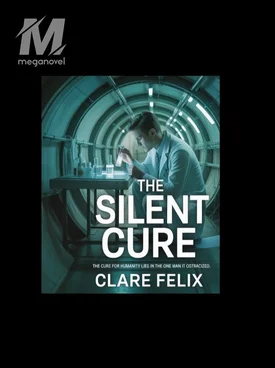
The Silent Cure: The cure for humanity lies in the one man i

By: Clare FelixCompleted
Language:
English
 16
16
16 Chapters: 301
 views: 3.5K
Read
Add to library
 Report
Dr. Ken Ardent did not vanish—he was buried alive by the state he tried to save. Once a famous geneticist in his previous life, Ken is now a ghost in the submerged maze beneath Amsterdam, leading a handful of outcast scientists who are themselves experts. Their bodies have been irreversibly rewritten, holding a feared secret: the cure for immunity. When the virus he has long foreseen brings devastation to Europe, Ken is the continent's most sought-after man. The same people who put him away as a criminal now scour the underwater canals, praying to catch his work. But his suggested remedy is a double-edged sword—to reveal it is to sign his people's death warrant. Traitor from within and pursued by an unstoppable inspector who sees not a cure but a biological weapon, Ken is driven to the brink. He must decide between protecting the only family he has left behind, or unleashing a discovery that can save the world—or complete its destruction. In a town where all gossip is heard and all friends can be enemies, the only thing more contagious than the plague is the truth.
Show more
Share


Overview
Catalog
Chapter 1
Chapter 1: The Drowned Heart
Rain pounded down in needles, slashing across the awry rooftops of Amsterdam, striking on ancient glass panes of stepped-gabled houses like a percussion section played to a single, mournful note. The canals floated with weeks of storms, black water lapping at their stone embankments, straining on mooring lines of long-abandoned boats. It was a city lit more by artificial eyes in the air than by the radiance of its people, a city turned into a web of surveillance and curfews. Drones flew in symphonic silence above the streets, their red optical sensors shining in the rain like beasts strolling their territory.
Dr. Ken Ardent rested his back against the dripping wet stone wall of a culvert, his ears turned not for rain, but for the hum. Each drone contained a defined frequency—a near-inaudible vibration in the air detectable to a sensitive ear if one listened carefully. They were closer than usual tonight. The patrols had doubled since the last outbreak of revolt in the southern quarter, and Ken was well aware that he was walking a thinner blade than a scalpel. His breath fogged the air as he adjusted the satchel on his shoulder, stabilizing its valuable contents against the turn of his body.
He walked like a shadow beneath the bridge's arch, boots sinking into the wet surface of ancient stone. When he reached the drainage grate that was his target, he went into a crouch, slipped his hand into his coat pocket, and produced a palm device made from cannibalized parts. There was a whispered crackle from it, then three blinking lights in turn—green, amber, green. The sequence was right. He jammed the contraption against the grate, and the magnetically held lock hidden behind the centuries of stone clicked open. Ken ducked below, closing the metal behind him, and stepped into the darkness.
The air down there was heavy, fetid with mildew and the tang of rust metal. Water dripped in the tunnels in steady, crashing beats, a sound that led him to an ancient clock, timing the city's hours for freedom. He turned on a small flashlight lantern, unwilling to use anything more powerful. Its feeble beam cut out chunks of the tunnel, revealing pipes wrapped in decaying insulation, ladders eaten away by moss, walls previously cut to route clean water now encased in neglect. He knew this labyrinth by heart. Every bend was committed to memory, every crack in the stone cataloged from hundreds of passes.
The lab was in advance, hidden in an arm of Amsterdam's historic flood-control system, a chamber originally constructed to control Amsterdam's lifeline canals. It was now more lifeline than relic, one of the last places where resistance was developed not in the fashion of violence but of knowledge. Ken edged past the final doorway and sighed at the sight: the glow of mismatched screens, vials in makeshift trays, skeletons of medical equipment gutted for spares. The air thrummed with the soft buzz of jury-rigged generators. It wasn't much, but it was alive. He'd made it through alive.
Setting his satchel on a stainless steel counter etched by years of scratches, Ken took out tonight's haul: two sealed vials of antiviral medication, stolen from a depot on the other side of town. They clinked gently against each other, fragile, potent, and maybe nothing—but maybe something. He looked at them for a moment, water still running from his hair into the collar of his shirt. His own face reflected in the polished steel was gaunt: sunken eyes, day's worth of stubble, slightly hunched shoulders from too many hours bent over microscopes and too many late nights lying awake waiting to hear the footsteps. He was not supposed to look like a man who carried the weight of a city. He was supposed to look like another doctor, a researcher lost in the unremarkable. But Amsterdam had a way of forcing people into the jobs they never trained for.
The generators hummed louder, and Ken's colleague Elara came from behind the room, her black hair tied back in a tight braid, a lab coat stained at the cuffs. She glanced at the vials, her face hidden in the dark. "You took a risk tonight.".
Ken put them carefully into a chilled box, closing the lid before speaking. "Every night's a risk. These might provide some leeway."
"Or sell us nothing." Elara crossed her arms. She wasn't wrong. The virus had outpaced all known methods of containment. Whenever they thought they had a drug that could stall it, the next barrage of patients introduced a new mutation better than its parent. It was a constant living, breathing game of chess, and the city was the board. But Ken had to cling to hope that there existed a piece still on the board.
Rain drummed against the walls outside, its sound distant in the tunnels, a reminder of what lay beyond. Ken hunched over in the crashed chair next to his terminal, bringing up the reports for the day. Numbers flowed: infection rates, drone patrol courses, government decrees. He scanned them quickly, looking for patterns, a weakness. The drones did not watch the streets by themselves; they watched anomalies in human actions. A cough too rough, a body to move awry of the current of the crowds, a body temperature that didn't conform. Amsterdam was becoming a machine, and the people who inhabited it were cogs to be observed, quantified, and replaced when damaged.
A gentle beep from the console arrested his attention. A secure channel was requesting his reply. Ken entered a code, fingers flying, and Markus's visage appeared on the fuzzy screen. His voice was garbled but urgent. "Ken, listen. They've doubled the perimeter drones around Jordaan. Someone reported underground activity. They're canvassing the blocks tonight."
Ken's stomach grew cold. "That's close. Too close."
"Closer than you think. I don't know who they're hunting, but if they even get a whiff of you—" Markus's sentence faded away, eyes flicking as though he wasn't speaking alone. "Just keep your head down. I'll try to stall the investigation from my end.".
The screen flashed dark before Ken could react. He didn't move, the echo of Markus's wariness weighing on his head. Markus possessed government contacts, ones he never revealed fully but relied on in cases like this one. It was a delicate affair, one which would topple the entire network if the wrong thread was pulled.
Elara watched him across the room, her eyebrows creased. "What did he say?"
"Coming up with the hunt." Ken rubbed his temples. "We'll have to seal our circuits. Limit surface exposure."
"And the rations? We can't ration so much longer." Her voice held a desperate quiet, the kind that came after weeks of watching patients deteriorate, after burying failures in silence.
Ken walked, pacing the length of the room. His thoughts were tangled with the beat of the rain, the humming, the dripping water drips in the tunnels. He had become accustomed to fear, but this night it gnawed harder. Above them, the city was clenching its claws, and in the blackness of its shadows, the disease was mutating again.
For an instant, he allowed himself to dream what Amsterdam once was—water-filled canals with boats and talk, lights lined roads with bicycles weaving between cafes, music spilling from windows. He could almost hear the laughter if he shut his eyes. But opening them again, he saw the cold glow of his underground lab, the broken faces of his soldiers, and the maddening search for a cure that continually slipped through his grasp.
He gazed over his shoulder at the vials in the cold box, so fine as glass illusions. Tonight's theft might be big. Or maybe it wouldn't. But for the children who still pirated in hidden basements, for the households gathered in stony hush behind boarded windows, for the city that had forgotten what freedom tasted like—Ken Ardent would keep going, keep taking risks, keep looking.
Above him, the drones changed their trajectories, their red lights slicing through rain like the eyes of gods who no longer cared. And in Amsterdam's drow
ned core, the battle was on again.
---
Expand
Next Chapter
Download

Continue Reading on MegaNovel
Scan the code to download the app
TABLE OF CONTENTS
Comments
No Comments
Latest Chapter
The Silent Cure: The cure for humanity lies in the one man i Chapter 301: The Whisper in the Ashes
Epilogue:The city no longer smelled of fear. For the first time in decades, the canals carried the scent of rain and wet stone instead of decay, and the wind sweeping through the repopulated streets was cool and clean. The Grey Shiver was a ghost, a cautionary tale told to children who had never known a world without the gentle, protective hum of the cure in their blood. The plague had not been defeated in a single, glorious battle, but had been patiently, persistently washed from the world, carried in Sophia’s veins, in the bottles of serum passed hand-to-hand, in the whispers of a recipe shared across ruined borders.Sophia stood on the same bridge where, a lifetime ago, she had watched soldiers drag her father away. The iron railings were still rusted, the cobblestones uneven, but now they were traced by the quick, sure feet of children at play. Their laughter, bright and unburdened, was the true sound of the city's healing. They were the first generation of the new world—children
 Last Updated : 2025-11-06
The Silent Cure: The cure for humanity lies in the one man i Chapter 300: The Legacy of the Silent Cure
The path to the meadow was one she had walked only in memory, a route charted through pain and smoke. Now, it was a gentle track worn through young birch trees, their leaves a shimmering gold in the late afternoon sun. The air, which had once tasted of cinders and despair, was sweet with the scent of damp earth and blooming clover.Sophia walked slowly, her steps measured by the rhythm of a life nearing its natural conclusion. The staff in her hand was not strictly necessary, but she liked the solid feel of it, the connection to the ground. The faint, persistent glow in her veins had dimmed to little more than a memory in her own eyes, a secret light known only to her.She crested the small rise, and there it was.The meadow.The place where the palace had stood was now a sea of wild grass and flowers. Buttercups nodded their bright yellow heads beside purple vetch. Bees hummed a lazy, contented tune. The only remnants of the past were a few low, moss-covered mounds of foundation ston
Last Updated : 2025-11-06The Silent Cure: The cure for humanity lies in the one man i Chapter 299: The World Reborn
Time, which had once moved in the frantic, gasping breaths of crisis, began to flow like a river again. It carried the memories of the plague and the fall of the palace downstream, smoothing their sharp, painful edges into history. The Grey Shiver became a story grandparents told, their voices hushed as they described the cough that could steal a soul, the fear that had locked doors and hearts. To the children, it was a tale of monsters, as distant and unreal as the dragons of older legends.Nations, those grand, brittle constructs of the old world, had indeed faltered. The maps that had been redrawn with the blood of the plague were now being sketched again, not with borders of ink and authority, but with the dotted lines of trade routes and the shaded areas of mutual aid pacts. The Alpine Enclave, its rigid ideology unable to compete with the fluid, resilient network of free communities, slowly ossified and then fractured, its technology and people absorbed by the rising tide of a n
Last Updated : 2025-11-06The Silent Cure: The cure for humanity lies in the one man i Chapter 298: The Silent Heir
The reports began as whispers, carried not by radio waves, but by the slow, patient network of traders and travelers. They were strange, fragmented stories, easy to dismiss as folklore born from desperate hope. A child in a mountain village near Innsbruck, surviving a fall that should have shattered her bones, the bruises fading to a faint, silvery sheen in hours. A boy in a Scottish coastal settlement, his severe fever breaking overnight, a curious, golden light glimpsed in his veins before it faded with the illness.In Amsterdam, they were busy. The business of life had replaced the drama of survival. The council debated trade agreements with the Rhine Confederation. Engineers plotted the restoration of a windmill. Sophia’s students now pestered her with questions about calculus and history, the science of the cure having become as foundational and unremarkable as the law of gravity.It was Elara, ever the pragmatist, who first connected the dots. She maintained correspondence with
Last Updated : 2025-11-06
You may also like


related novels
Explore and read good novels for free
Free access to a vast number of good novels on MegaNovel app. Download the books you like and read anywhere & anytime.
Read books for free on the app