


Not enough ratings
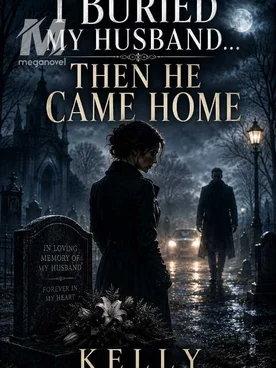
I Buried My Husband… Then He Came Home

By: Kelly Completed
Language:
English
 18
18
18 Chapters: 100
 views: 542
Read
Add to library
 Report
She buried her husband three years ago. She's been visiting his grave every year since, telling herself the same lie: that grief fades, that closure is real, that Adrian is gone. Then a photo lands in her phone. A billionaire at a gala, laughing at something off camera. Adrian's face, on a stranger's body, wearing a stranger's name. Elena tells herself it's coincidence, until she's sitting across from Damian Voss in his own office and he says her name, a name that was never on her business card. Damian doesn't remember her. He doesn't remember much of anything before the coma that rebuilt him from nothing, a new identity, a new life, built on top of a silence nobody in his life has ever questioned out loud. But somebody built that silence on purpose. And somebody is still protecting it. The closer Elena gets to the truth, the more it costs her, and the more it costs the people around her. Because the man who buried her husband's identity didn't do it to save him. He did it because a dead man can't testify. Some graves don't hold what you buried in them. Some marriages don't end the way you think they did. And some men come back not because they escaped, but because someone finally let them go.
Show more
Share


Overview
Catalog
Chapter 1
Chapter One
The cemetery smelled like wet stone and cut grass, and Elena Vance had learned to hate both.
She came every year on the same day, at the same hour, and she always told herself this would be the year she didn’t cry. It never was. She stood in front of the granite marker that read ADRIAN JAMES CROSS, BELOVED HUSBAND, and she felt the same hollow drop in her stomach she’d recognized the first time, three years ago, when a stranger in a county uniform had asked her to identify a body burned past recognition and she’d said yes because the ring on what was left of his hand was the one she’d put there herself. “Three years,” she said out loud, because saying it in her head never was real enough. “I brought the peonies. I know you always said they smelled like old ladies’ perfume, but the florist was out of everything else.” The wind moved through the cypress trees at the edge of the plot and did nothing to answer her. It never did. Elena had stopped expecting it to. She crouched to set the flowers against the base of the stone, and her knees ached in that particular way that reminded her she wasn’t twenty-nine anymore, she was thirty-two, and grief had aged her faster than the years alone would have. She’d read somewhere that widows aged in dog years for the first twelve months. She believed it. She’d looked in the mirror the week after the funeral and not recognized the woman staring back, gray under her eyes, mouth pulled thin. Her phone buzzed in her coat pocket. She almost ignored it. Almost. It was Nadia. You still at the cemetery? Yes, Elena typed back. Just leaving. Good. Because you need to see something and I don’t want you seeing it alone. Elena frowned at the screen. Nadia Bloom did not send cryptic texts. Nadia was a lawyer, precise to the point of exhausting, the kind of friend who read every contract twice and still asked a third time if you were sure. Vague was not her language. See what? The three dots appeared and disappeared twice before Nadia finally answered. There’s a gala tonight. Cross Foundation’s building the new pediatric wing, remember, the one you did the restoration bid for and lost. Anyway there’s a photo from the pre event mixer going around. Some tech guy, financier, whatever he is. Elena, he looks like Adrian. Like, exactly like Adrian. Elena read the message twice, then a third time, the way you read something when your brain refuses the first two attempts. People look like other people, she typed back, because that was the sane thing to say, the thing a person who had grieved properly and moved on healthily would say. It happens. Not like this it doesn’t. I’m sending you the picture. She stood at her husband’s grave with her thumb hovering over her phone screen, and some old, stubborn instinct told her not to open the image. Whatever came next, she wouldn’t be able to un-see it. She’d learned that lesson already, once, at a morgue three years ago, when a man in scrubs had pulled back a sheet and shown her something so wrong that it lived behind her eyes for months afterward. She opened it anyway. The photograph was grainy, taken on someone’s phone from an angle that caught the subject mid-turn, laughing at something off camera. Dark hair, a little too long at the collar the way Adrian’s always got when he skipped haircuts for weeks at a time because he said barbershops made him anxious. A jaw that Elena had once traced with her fingertip in the dark, memorizing it the way you memorize things you don’t yet know you’ll lose. The same crease at the corner of his left eye, deeper on that side because of some childhood injury he’d never fully explained. The man in the photo was wearing a suit that cost more than Elena’s car. Elena’s hand started shaking so badly she had to sit down on the cold cemetery bench, her flowers already wilting a few feet away on Adrian’s grave, and she stared at the screen until her vision blurred and she couldn’t tell if it was tears or just the strain of looking too hard for too long. It’s a coincidence, she typed, though her fingers felt clumsy and distant, like they belonged to someone else. People have doubles. It’s a thing. Some kind of syndrome, actually, I read about it once. Elena. I mean it. This isn’t him. I identified his body. I picked out his coffin. I watched them lower it into the ground. This is not a mystery, Nadia, this is a stranger who happens to look like my dead husband and I’m not going to fall apart over a bad photo. She hit send before she could second-guess it, before the part of her that had spent three years grieving methodically, carefully, like a job she had to do right, could stop her and ask why her heart was pounding like she’d just run six miles. Nadia didn’t reply right away. When she did, it was just three words. Who is he? Elena stared at that question longer than she wanted to admit. She didn’t know. She hadn’t asked. She’d been too busy convincing herself it didn’t matter. His name’s on the gala invite list, Nadia wrote a minute later, apparently unable to leave the silence alone. Damian Voss. Ring a bell? It didn’t. Elena had never heard the name in her life, not from Adrian, not from anyone, not in any of the financial circles Adrian used to move through back when he still worked for that firm downtown, the one he quit eight months before he died, the one he’d never talk about except to say it wasn’t a good fit and he needed something quieter. She’d never pushed. She regretted that now, the way she regretted a hundred small silences from their marriage, all the questions she hadn’t asked because she’d trusted there’d be time later. Never heard of him, she typed. He’s some big deal. Runs an investment fund, Voss Capital, does a lot of infrastructure and real estate stuff. Guy’s worth I don’t even know, hundreds of millions probably. Just showed up on the scene like eighteen months ago, nobody really knows where from. Elena closed her eyes. The cemetery air was cold enough that she could feel it in her teeth when she breathed, and somewhere behind her a groundskeeper was running a mower along the far row of graves, the drone of it strange and mundane against the thing happening inside her chest. I have to see him, she typed, and immediately regretted how it sounded, how unhinged, how exactly like the kind of thing a grieving widow says in movies right before the audience realizes she’s imagining the whole thing. Elena, no. Absolutely not. You are not showing up at a gala to stalk a billionaire because he has your dead husband’s cheekbones. I’m not stalking anyone. I want to see him. In person. Not a photo. If it’s nothing, it’s nothing, and I’ll go home and sleep and never think about it again. And if it’s not nothing? Elena didn’t answer that one. She didn’t have an answer. She sat on the bench with the wind picking up around her, cutting through her coat, and she thought about Adrian’s laugh, the real one, not the practiced version he used for clients, and how the photograph on her phone had caught this stranger laughing in a way that made her stomach twist because it was the same laugh, exactly the same, head tipped a fraction to the left, eyes crinkling at the same corner. She thought about the funeral. The closed casket, because there hadn’t been much choice about that. The way her mother had held her arm the entire service like she thought Elena might simply fold in on herself and disappear. The insurance investigator who’d come by two weeks later with a stack of paperwork and a tone that suggested he found the whole thing routine, a car accident on a rain-slicked overpass, driver lost control, vehicle went into the ravine and caught fire before anyone could reach it. She thought about how she’d never actually seen the wreck. Never seen the car. Only ever seen what was left of a man they told her was her husband, and photographs of twisted metal that the investigator had shown her once, quickly, the way you show someone something you don’t want them to look at too closely. At the time she hadn’t thought to look closely. She’d been drowning. Grief does that. It makes you accept the story you’re given because the alternative, asking questions, poking at the wound, feels unsurvivable. Three years later, sitting in a cemetery with a photograph of a stranger who wore her husband’s face like a mask he’d forgotten to take off, Elena Vance realized she had never actually asked a single hard question about the day her husband died. She stood up. Her legs was unsteady, the way they had in the first weeks after the funeral, when simple things like standing or making coffee or answering the phone had required a kind of effort she hadn’t known a body could summon. I’m going tonight, she typed. The gala. Get me in. Elena, I really don’t think Nadia. Please. There was a long pause. Elena watched the three dots appear, vanish, appear again, the way they did when someone was drafting and deleting an argument they knew they’d lose anyway. Fine, Nadia wrote at last. I can get you a plus one under my firm’s table. But you’re not going in there and making a scene, Elena. You’re going to look at him, from a distance, like a normal person, and then we’re going to talk about whether any of this is worth pursuing. Deal? Deal, Elena typed, and she meant it, or she meant to mean it, in the same way she’d meant a hundred promises to herself over the last three years that she hadn’t quite managed to keep. She looked back at the grave one last time before she left, at the flowers already drooping in the cold, at the name carved into stone that she had chosen the font for herself, something clean and simple because Adrian had always hated ornate things, said they tried too hard. “I’m sorry,” she said to the stone, though she wasn’t entirely sure what she was apologizing for. Maybe for doubting the ground beneath her feet after three years of standing on it. Maybe for the small, treacherous flicker of hope already lighting somewhere under her ribs, a feeling she hadn’t let herself have since the week after the accident, when for exactly four days she’d convinced herself there had been some mistake, that Adrian would walk through their front door any minute, tired and confused and apologetic for scaring her. The hope had been wrong then. Cruel, even, the way it had left her when the truth reasserted itself. She had no way of knowing, walking back to her car through rows of the dead, that this time it wouldn’t be. The drive home took twenty minutes she didn’t remember driving. She came back to herself at a red light three blocks from her apartment, hands locked on the wheel at ten and two, radio playing something she hadn’t chosen and couldn’t have named, and she sat there through two full light cycles before the car behind her honked and startled her back into motion. Her apartment still had Adrian’s things in it. Not all of them. She’d given away his clothes eighteen months ago, in a burst of grief-fueled resolve that she’d regretted within the week, and she’d sold his car, and she’d finally, after two years of avoiding it, converted his old study into a guest room nobody ever used. But some things had proven impossible to part with. His reading glasses still sat in the drawer of the nightstand on what had been his side of the bed. A coffee mug with a chip in the handle, the one he always reached for out of the whole cabinet even though she’d bought him a nicer set for their second anniversary, still lived at the back of the cupboard where she’d put it the week after the funeral because she couldn’t bring herself to use it and couldn’t bring herself to throw it away either. She stood in her kitchen that evening with the photograph pulled up on her phone again, staring at the stranger’s laughing face, and she thought about all the small artifacts of a marriage that outlive the marriage itself, all the objects that keep meaning things long after the person who gave them meaning is gone. She wondered, not for the first time since Nadia’s text, whether grief had simply worn a groove into her mind so deep that any man with the right coloring and the right jaw would fall into it and she’d mistake the shape for the man himself. But she kept coming back to the eyes. Photographs rarely captured eyes correctly, everyone said so, the camera flattened them into something generic. And yet this stranger’s eyes, even reduced to pixels on a five inch screen, had carried something she recognized bone-deep, some particular quality of attention that Adrian used to fix on her when he thought she wasn’t watching him watch her. She didn’t sleep that night, not really. She lay in the dark running through three years of small, unexamined details, the strange calls in the garage, the locked laptop, the way he’d flinched once when a car had backfired on their street and hadn’t fully relaxed for the rest of the evening, and she wondered how much of her husband’s life she had actually known, and how much she had simply agreed not to ask about.Expand
Next Chapter
Download

Continue Reading on MegaNovel
Scan the code to download the app
TABLE OF CONTENTS
Comments
No Comments
Latest Chapter
I Buried My Husband… Then He Came Home Chapter One Hundred
The cemetery still kept its grass too green for November, and Elena had finally, after everything, decided that was a mercy after all. She stood at the edge of the old plot, the one that had held an empty coffin for three years before Torres's team had quietly, respectfully arranged for its contents to be properly identified and returned to Ruth Webb the previous spring. The headstone that had once read ADRIAN JAMES CROSS was gone now too, replaced, at Elena's own request and with Ruth's grateful blessing, by a small, simple marker bearing a different name entirely. MARCUS ANDREW WEBB. BELOVED SON. HE WANTED TO TEACH. Ruth had chosen the words herself, and Elena had thought, the first time she'd read them, that she'd never encountered a truer epitaph in her life. "Still strange, coming here," Adrian said beside her, his breath showing faintly in the cold air. "Standing at a grave that was never actually mine, knowing the man who's actually here deserves
 Last Updated : 2026-09-15
I Buried My Husband… Then He Came Home Chapter Ninety-Nine
It happened on an ordinary Tuesday evening in late autumn, nearly a year after the vow renewal, while Adrian was doing nothing more significant than washing dishes at the kitchen sink, the radio playing low in the background, Elena at the table finishing paperwork from the Hendricks project's final inspection.He went very still, mid-motion, a plate suspended in his hands, water still running over it."Adrian?"He didn't answer immediately, and Elena rose from the table, crossing to him with a familiar, careful urgency, the old instinct never quite fully retired even a year into genuine peace."I'm okay," he said finally, setting the plate down carefully, turning off the water. "I think. That was strange.""What happened," Elena asked, drying his hands with the towel from the counter, the small, ordinary gesture of care that had become, over the past year, its own quiet language between them."A flash," Adrian said slowly, workin
Last Updated : 2026-09-14I Buried My Husband… Then He Came Home Chapter Ninety-Eight
The paperwork arrived on a Thursday, plain and unremarkable in a way that struck Elena as almost absurd given what it actually represented, a simple courthouse form finalizing the legal dissolution of the Damian Voss identity and the full, permanent restoration of Adrian James Cross as his one and only legal name."It feels strange," Adrian admitted, turning the document over slowly at the kitchen table, "that something this significant fits on two pages. I thought there'd be more to it, somehow. More ceremony.""Do you want ceremony," Elena asked.Adrian considered the question, and something thoughtful crossed his face, the particular expression Elena had come to recognize as him genuinely weighing an idea rather than simply reacting to it. "Maybe not ceremony exactly," he said finally. "But I don't want this to just be paperwork either. I've spent this past year having identity done to me, by Kessler, by Voss, by a company that decided what I was worth
Last Updated : 2026-09-13I Buried My Husband… Then He Came Home Chapter Ninety-Seven
Nadia called on a Tuesday morning with news she'd clearly been sitting on for at least a day, waiting, Elena suspected, for exactly the right moment to deliver it in person rather than over the phone."It's done," she said, settling into the kitchen chair she'd claimed as her own over the past year, laptop bag set carefully beside her rather than immediately opened, a small tell that told Elena this conversation mattered enough to Nadia that she wanted to have it without a screen between them. "The federal review into your firm's old contracts. Fully closed, Elena. No charges, no findings of wrongdoing, nothing on your record beyond the acknowledgment that you were an unwitting party to transactions structured specifically to conceal their true origin."Elena felt something in her chest loosen that she hadn't fully realized she'd been holding tight for months, a fear she'd carried quietly since the day Torres first mentioned her firm's old paperwork tracing back to
Last Updated : 2026-09-12
You may also like

related novels
Explore and read good novels for free
Free access to a vast number of good novels on MegaNovel app. Download the books you like and read anywhere & anytime.
Read books for free on the app