


Not enough ratings
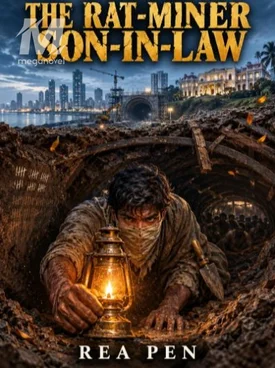
The Rat-Miner Son-in-law

By: Rea PenUpdated just now
Language:
English
 4

4 Chapters: 10
 views: 1
Read
Add to library
 Report
"In this house, the ghar jamai eats last, Chooha." For a year, Kusum Malhotra has fed her daughter's husband after the servants and called him Chooha, the rat, because before he married into Mumbai's richest construction family, Kabir Rawat crawled through illegal coal mines for a living. Not one Malhotra suspects that Kabir is the Ustad, the rat-miner who dug forty-one men out of the Silkhet tunnel with his bare hands and then built the rescue firm every government in India calls when the ground gives way. Then the Malhotras' new metro tunnel collapses under South Mumbai. The family tells the cameras twelve men are trapped. Kabir knows there are forty, because his little brother is one of them. He goes into the dark with a lamp and a trowel. His wife, Ishani, is the only Malhotra who goes with him. Now a bought inspector wants the ghar jamai in a cell, Ishani's own family is about to throw her out for taking his side, and the labour boss everyone calls the Thekedar wants only twelve men to come out alive. How many can one rat bring home when the people burying them live under his own roof?
Show more
Share


Overview
Catalog
Chapter 1
Chapter One: Sagar Line
Forty men were buried alive under South Mumbai when the Malhotras' new metro tunnel caved in, and the family told the cameras there were twelve.
Their ghar jamai knew the real number, because his little brother was one of them.
Kabir Rawat was at the shaft mouth when it happened, the night register in one hand and a cup of cutting chai he had forgotten to drink in the other. Dawn was twenty minutes away, and the cranes over the Sagar Line site hung against a grey sky like tired herons. Then the earth made a sound Kabir had hoped never to hear again, a long grinding groan he felt through his boots before it reached his ears.
The chai went over the rail. Dust boiled up the shaft in a thick grey column, and two hundred metres in from the bottom, the tunnel roof came down on the night shift.
He looked at the register because his hands needed something to hold. Twelve names were printed on it in neat company type, every one signed in at ten o'clock. Twelve men with helmets, insurance numbers and families who knew how to file a case. But at midnight Kabir had watched the cage go down four more times, crammed with men off the Thekedar's truck. They came from Jharkhand, Bihar and the hills, with cloth tied over their mouths instead of masks. The Thekedar's gangs did not answer to the ghar jamai, so Kabir had done the only thing he could. He had counted them, the way he counted everything that went underground.
Twenty-eight.
The last of them had been Sonu. He had grinned up through the cage bars, twenty years old and four weeks off the bus from the hills, still wearing the red sneakers he had bought in Dadar with his first week's pay. "Don't tell Bhabhi I'm on nights," he had shouted, "or she'll feed me twice." Then the cage dropped, and the dark took him.
Kabir gripped the rail and shouted his brother's name down into the dust. Nothing came back but the hiss of a broken air line.
By the time the sun cleared the water, the site was full of sirens and the road outside was full of cameras. Varun Malhotra, Ishani's brother and the director of the Sagar Line project, stood before them in a spotless white hard hat with his face arranged into exactly the right amount of grief. He had always been good on television.
"Our prayers are with every family," he said. "I promise you, we will not rest until all twelve workers are brought home safely."
Kabir watched from behind the barricade with the register folded in his shirt pocket. Twelve. The number went out on every channel in the country, and twenty-eight men stopped existing.
The rescue plan was Varun's, and it was expensive. A giant boring machine was lowered down the shaft and driven into the rubble to push a steel pipe, barely wider than a man's shoulders, through the collapse to wherever the survivors were. Engineers in clean jackets watched its progress on a row of monitors in the site office, cheering every metre. The machine chewed through earth all morning.
At noon it hit steel. The cutting head screamed against a nest of reinforcement bars from the fallen tunnel ring, shuddered, and stopped. They restarted it twice, and the second time something inside it cracked for good.
Kabir pushed into the site office. His shirt was black with dust and his eyes were red, and the engineers stepped back from him without meaning to. "Let me go in by hand," he said to Varun. "Through the pipe. The last stretch can be dug. I only need a lamp and an air line."
Varun laughed, loud enough for every engineer in the room to hear. "This isn't a coal hole, Chooha."
A couple of the younger men laughed with him, and the rest found something interesting on their screens. Kabir had heard that name every day for a year, at the dinner table, in front of the servants, from his mother-in-law's mouth as she set his plate down last. He did not answer it now. He walked out.
Behind the site hoarding, away from the cameras, he took out his phone and dialled a number he had not used since his wedding. It was answered on the first ring. "Sagar Line," Kabir said. "Forty men. Bring the hand crew." He hung up without waiting for a reply.
Within two hours, three dusty trucks rolled through the gates with PATHFINDER RESCUE painted on their doors. Six wiry, quiet men climbed down and unloaded short trowels, pickaxes, coiled air lines and battered brass lamps. They moved the way Kabir moved underground, without a wasted step. Their leader, grey at the temples, walked straight to Varun and handed him an envelope. Inside was an order from the state disaster authority placing Pathfinder in command of the rescue.
Varun read it twice, then made three phone calls, his voice climbing with each one. Nobody he called could change a word of it. He was still holding the phone when the grey-haired leader looked across the yard at Kabir and gave him the smallest nod. Nobody else saw it.
Kabir took a lamp and a short trowel from the nearest truck and went down the shaft. At the end of the tunnel, the mouth of the rescue pipe stuck out of the rubble like a broken bone. He crawled inside on his elbows with the lamp pushed ahead of him and the air line hissing beside his ear. The pipe was hot and tight and stank of hydraulic oil. Forty metres in, the light found the cutting head, wedged in twisted rebar.
He felt along its edge until his fingers found a seam where the fill was loose. Then he began to cut in small, careful strokes, packing the spoil behind him the way he had learned as a boy in the coal pits, where one careless swing could bring the whole hill down. When he had opened a hole the size of his fist, he put his lips to the gap and whistled three times into the dark, short and sharp. Then he waited, listening to the earth settle and tick.
From somewhere ahead, faint as a memory, three whistles came back.
Kabir pressed his forehead against the wet mud and shut his eyes. It could have been any of them. For one moment, he let himself believe it was Sonu.
In the emptied site office, Rajendra Malhotra stood alone before the monitors. He was Ishani's father, and his name was on every hoarding in the yard. On the centre screen, the camera at the rubble face showed his son-in-law's boots disappearing into the pipe. Rajendra watched until there was nothing left but darkness. Then he locked the office door, took a second phone from his jacket, and made a call.
"There are forty down there," he said, "and my ghar jamai has brought diggers."
The voice the Malhotras knew only as the Thekedar did not hurry. It never did.
"Then make sure twelve come out."
Expand
Next Chapter
Download

Continue Reading on MegaNovel
Scan the code to download the app
TABLE OF CONTENTS
Comments
No Comments
Latest Chapter
The Rat-Miner Son-in-law Chapter Ten: The Thekedar
The watchman opened the gate before Ishani reached it. He was the same man who had stood beside her suitcases a week ago, staring at his feet, and he did not look at her now either. He only pulled the iron gate wide and stepped back, as if he had known she would come.Kabir walked beside her up the drive with the old register wrapped in plastic under his arm. Neither of them had slept. Sometime before dawn, sitting on the cot in Dharavi with the book open between them, Kabir had finally read the line with his father's name on it. He read it once, without a word, and closed the book.The house looked exactly as it always had. The fountain still played in the forecourt. The marble steps still gleamed. The brass bell still hung beside the front door, the one Ishani used to ring as a little girl just to hear it echo through the halls. A servant opened the door, saw who was standing there and hurried away into the back of the house without a word.Ishani did not need to ask where her mothe
 Last Updated : 2026-11-06
The Rat-Miner Son-in-law Chapter Nine: Pappy And Raju
Kabir did not need Varun to tell him where the missing boys were. The munshi's register already had.Ishani had photographed every page of both Sagar Line ledgers before Ramesh carried them to the inquiry. That night, after the service tunnel, she went through the photographs again while Kabir slept with his head in her lap. Two pages after the margin note, in the column where Ramesh logged camp rations, she found two extra plates entered every day since the collapse. They were marked for the Thekedar's labour camp behind a brick kiln outside the city. Ramesh had written them down himself, the way he wrote down everything, without ever being told who would eat them.The Thekedar was keeping Pappu and Raju quiet until the inquiry was over.Kabir went in the next morning. He took no police, because he no longer knew which police belonged to the Thekedar. He took Mohan and Ramesh, and he took the mothers of both boys, who had come down from the hills on the overnight bus the day Ishani s
Last Updated : 2026-11-06The Rat-Miner Son-in-law Chapter Eight: The Side Drift
Malhotra Infra was falling apart in public, one headline at a time.On Tuesday, the state suspended every metro contract the company held. On Wednesday, Pathfinder Rescue announced that it would not certify the safety of a single Malhotra tunnel until the inquiry was complete, and three city projects stopped overnight. By Thursday morning, two banks had called in their loans.Rajendra sat at the top of Malhotra House with the letters spread across his desk and read them again and again, as if the words might rearrange themselves. He had spent forty years building this company. He had survived recessions, strikes and rivals who wanted him finished, and now it was coming apart in a week because of a labour supervisor his wife called a rat. He could not understand how. Every time he tried, he came back to the same picture of a Chief Minister bowing in the mud.That afternoon, a black car stopped at the mouth of the lane in Dharavi, too wide to go any further. Varun sat in the back with t
Last Updated : 2026-11-06The Rat-Miner Son-in-law Chapter Seven: The Munshi's Register
Ramesh Tiwari came down the lane after dark, keeping close to the walls, with an old canvas bag pressed against his chest as if it might bite him.Kabir knew him by sight. Everyone on a Malhotra site did. For twenty years, Ramesh had been the Thekedar's munshi, the thin clerk in taped-up spectacles who sat at a folding table beside every shaft and wrote down who went in and who came out. He never looked anyone in the eye. On the night of the collapse, he had written twenty-eight names in a book nobody would ever admit existed, and one of those names had been his own son's.Kabir had carried that boy out on his back on the second night, crawling the length of the pipe with the boy's arm hooked around his neck and his breath rattling in Kabir's ear. Now the boy stood a step behind his father in the doorway, thin as a reed, his hands still wrapped in gauze.Kamla let them in without a single question, the way she let everyone in. Ramesh set the bag on her little table, between a plate of
Last Updated : 2026-11-06
You may also like


related novels
Explore and read good novels for free
Free access to a vast number of good novels on MegaNovel app. Download the books you like and read anywhere & anytime.
Read books for free on the app