


Not enough ratings
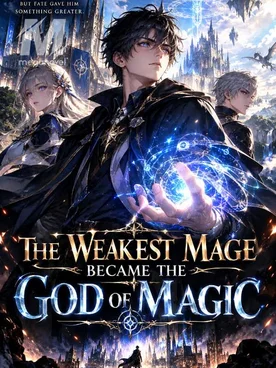
The Weakest Mage Became The God Of Magic

By: TAKATOUUpdated just now
Language:
English
 18

18 Chapters: 10
 views: 2
Read
Add to library
 Report
Every mage is born with a cup. Adrian Frost was born with an empty one. At sixteen, every child in the Empire of Valdris is Awakened. The ceremony reads the shape of your soul and assigns your affinity — fire, ice, lightning, earth — and that reading decides the rest of your life. Noble or commoner. Tower or gutter. Adrian's reading comes back Null. Not weak. Not faint. Nothing. The diviner checks three times. The verdict is published: the weakest mage in recorded history. He should have gone home and lived a quiet life. Instead, he goes to the Imperial Magic Academy, where the nobility laugh at him and the professors grade him last, and where — in a forbidden ruin beneath the school — he survives something that should have killed him. And in the moment between life and death, his empty core fills. Not with power. With a system. [Evolution Through Survival.] Adrian cannot grind for strength. He cannot level up. He can only survive — burn him and he learns fire, crush him and he learns gravity, tear at his soul and he learns soul. Every enemy becomes a teacher. Every near-death becomes tuition. Every wound is a lesson he never asked for and cannot refuse. But his broken core was never broken. It was empty on purpose — built by a civilization the gods erased, to hold the original language of reality. And the thing that speaks through the system has been waiting six thousand years for someone like him. He climbs from the joke of the academy to the man who kills gods. He will uncover the lie at the foundation of magic, fall in love with a noblewoman hiding a death sentence of her own, and bury friends he cannot evolve back to life.
Show more
Share


Overview
Catalog
Chapter 1
Chapter 1 — The Boy Outside the Inn
The snow came down in slow, fat flakes that turned the whole valley quiet and clean, and Adrian Frost stood barefoot in it because he had forgotten his boots, and because the mage-tower was lit.
It was far away. Miles and miles across the frozen river, the black pines, and the long white fields that nobody crossed in winter. But on a clear night like this, when the clouds broke and the moon leaned low, the tower burned blue. It rose out of the far hills like a needle of glass, and its light did not flicker the way candlelight did. It held steady and cold and certain, the way Adrian imagined the stars would look if you could walk up close to them. He had asked Mother Wen once what made it shine. She had said, Mages, in the flat voice she used when she did not want to talk about a thing. She said it the way she said wolves, or tax collectors, or the war—as if it were something to be respected from a distance and never approached. Adrian had decided, privately, that he would approach it anyway. He did not know exactly how old he was. Mother Wen said he was six, and he believed her, mostly. He knew that he had been found in the snow, and that this was why he had no name from a father. He knew that the other children in Greyhollow had fathers and mothers and sometimes grandparents, and that he had only Wen, who was old and smelled of bread and said come inside before you catch your death at least nine times a day. He knew that the inn was cold in the winters and warm in the summers, and that they never had quite enough money. He knew that when the mage-tower glowed like this, it meant somebody, somewhere, was doing something important. He wanted to know what. The snow had reached his ankles. His feet had gone from hurting to not hurting at all, which he suspected was worse, though he could not have said why. He tucked his hands under his arms and kept watching. The tower light pulsed once, faintly, like a heartbeat, and a thin thread of blue climbed up from the hills and vanished into the black. That’s a spell, he thought. That’s a spell going somewhere. “Adrian Frost.” He flinched, more at the sound than the words. Mother Wen stood in the inn’s doorway with a candle in one hand and the door half-open behind her, letting out a slab of warm yellow light that made the snow look dirty by comparison. She was wrapped in three shawls, her grey hair braided for the night, and her mouth set in the flat line that meant I have been worried and I do not wish to admit it. “You have no boots,” she said. Adrian looked down at his feet. “I forgot them.” “You forgot them.” “Yes.” She was quiet for a moment. Then she stepped down onto the snow in her own bare feet—she did not even flinch, which he found remarkable—and crossed the yard. She wrapped the thickest of her shawls around his shoulders and pulled it tight, like a blanket over a stubborn child. “Come here,” she said. She sat on the inn’s doorstep and patted the stone beside her. He sat, and she pulled him against her side. The cold retreated from everywhere except where she was touching. They looked at the tower together. “Blue means lightning,” she said after a while. “Mostly. Could be a storm-mage doing weather work for the Emperor. Could be a healer mending something that would kill an ordinary man. Could be nothing at all. Mages do a great deal of nothing, in my experience, and call it research.” “Is it far?” “Aye.” “How far?” “Far enough that if you walked it in winter, I would have to bury what was left of you in the spring.” Adrian thought about this. “If I went in summer—” “You would still not go,” she said, “because I would still be here, and you would still be my boy, and I am old and I do not wish to be buried alone.” He leaned into her. The shawl smelled of her—bread and woodsmoke and the faint sour of old wool—and his feet began, distantly, to hurt again, which meant the warmth was working. “Do you think I’ll be a mage?” he asked. She did not answer at once. That was one of the things he loved about her. Other grown-ups answered questions like a door slamming. Wen opened the door, walked through it, and looked around before she said anything. “Maybe,” she said. “Only maybe?” “Only maybe.” She adjusted the shawl around his neck. “The Awakening chooses, not us. When you’re sixteen, the Church will come with its candles and its little crystal, and it will look inside you, and it will tell you what you are. That’s how it works. That’s how it’s always worked.” “What if it says I’m nothing?” The words came out flatter than he meant them to. He had not planned to ask. He had planned to ask about the tower, and about the thread of blue, and about whether the mages up there ate better than they did. But the question was there in his chest the way his feet had been in the snow, and once it was there it would not leave. Mother Wen was quiet for a long time. The candle guttered in the doorway behind them. The snow kept falling. The tower kept burning. “Adrian,” she said at last, and her voice was different now—lower, rougher, like she was pulling each word up out of a well. “You’ll be something. I just don’t know what yet.” He looked up at her. Her face was turned away, toward the tower. Her jaw was set. Her eyes were wet, though whether from the cold or from something else he could not tell, and he did not ask, because he was six and she was old and there were some things you did not ask your mother, even when she was not quite your mother, even when she had found you in the snow with a pendant around your neck and no note and no name and no parents anywhere in the world. “Inside,” she said. “Now. Before I have to explain to the priest why I let the innkeeper’s boy freeze on my own doorstep.” She stood. She pulled him up. She held the door open for him, and he walked through into the warm yellow light, and the snow stopped falling on him. He looked back once, over his shoulder, before she closed the door. The tower was still burning. The thread of blue had gone. The snow was already beginning to cover his footprints. He wondered if anyone up there, in the tower, had ever looked out across the valley and seen a small light at an inn, and wondered what it was. He thought probably not. Someday, he decided, with the fierce private certainty of a six-year-old who had not yet been told no by the world—someday I’ll be the one in the tower, and I’ll look out, and I’ll see somebody, and I’ll come down and tell them what the blue means. Behind him, in the warm yellow light, Mother Wen closed the door. And then, because she thought he could not hear her, because she had spent six years learning to hide this and had not yet learned to hide it well enough, she leaned her forehead against the wood and whispered something. He caught only one word of it. Snow. He did not know what it meant. He would not know for a very long time. That night, for the first time in months, he dreamed of a white city in the sky.Expand
Next Chapter
Download

Continue Reading on MegaNovel
Scan the code to download the app
TABLE OF CONTENTS
Comments
No Comments
Latest Chapter
The Weakest Mage Became The God Of Magic Chapter 10 — The Forty-Third Light
The crystal was cold.Not cold the way a stone is cold. Cold the way a well is cold—the deep, still, moving cold of something that is not still at all but is drawing heat out of you so patiently that you do not notice until it has taken everything. Adrian felt it go up his arms, past his wrists, past his elbows, and settle somewhere behind his ribs like a hand closing.And underneath the cold, the pull.It was the same pull he had felt across the hall, but close now, close and hungry and specific. It was not pulling at his skin. It was not pulling at his mana. It was pulling at the place behind his breastbone where the pendant lay warm against his chest, and it was pulling at the stone at the base of his spine, and it was pulling at him—at whatever it was that made him Adrian and not a chair or a candle or a boy in a basket in the snow.He held on.He did not know why he thought hold on—it was not as though there was anything to let go of—but something in him set its feet, the way you
 Last Updated : 2026-11-24
The Weakest Mage Became The God Of Magic Chapter 9 — The Ceremony Arrives
The solstice came the way the solstice always did in Greyhollow: quietly, and with more food than anyone could afford.By mid-afternoon the whole village was in the hall. The granary had been cleared of its last sacks, swept, hung with evergreen, and lit with more candles than had burned in it since the harvest festival. The long tables had been pushed to the walls and covered with what everybody had. Somebody had brought a whole roasted pig, which meant somebody had killed a pig, which meant somebody would be hungry in February. Everybody knew it. Nobody said anything.Forty-three candidates. Forty-three families. That was the arithmetic of the day.Adrian stood at the back with Joss and did not eat.“You should eat,” Joss said.“I’m not hungry.”“You’re never not hungry. You’re the hungriest person I know.”Adrian looked at the pig. His stomach turned over and refused it.“It’s fine,” Joss said. He said it too loudly, the way he always did when he was trying to convince himself. “It
Last Updated : 2026-11-24The Weakest Mage Became The God Of Magic Chapter 8 — Mother Wen’s Warning
Adrian sat on the chest with his hands on his knees and the fire downstairs ticking as it cooled, and he told her.He told her about the city. The white towers, the broken glass, the ash falling out of a wound in the sky. He told her about the staircase with no railing and the avenue of grey trees and the door standing alone in the middle of the road, black as the pendant, with a handle but no house behind it. And he told her about the girl.“She was standing in front of it,” he said. “She was turned away. And then she turned around, and I woke up.”Mother Wen had not moved the entire time. The dried flower lay in her lap, forgotten. When he finished, she looked down at it for a while, and then she said, quietly, “How old was she?”“I don’t know. My age. Maybe younger.”“Pale hair?”“Yes.”“Grey coat?”“…Yes.”Mother Wen’s hands closed around the flower. She did not say anything for a long moment. The fire downstairs ticked, and the frost on the window crackled faintly as the last of
Last Updated : 2026-11-24The Weakest Mage Became The God Of Magic Chapter 7 — The Snow Remembers
The dream was different. It had never been different before. For as long as he could remember, the white city had come to him the same way each time—high, distant, clean, and empty. Towers of silver glass rising out of cloud. A staircase with no railing. Silence so complete it had a texture. That night, the city was burning. He stood at the top of the staircase. The staircase had no railing and the drop on either side went down past the clouds into nothing. The towers stood all around him, and they were still white, still silver, still impossibly tall—but they were broken. Whole floors had been sheared away. Great shards of glass floated in the air where walls should have been, turning slowly. And the sky above the city was not the sky. It was a wound—a long black tear that pulsed, and from the tear came a fine grey snow that was not snow. Ash. It fell in slow, patient flakes. It settled on his shoulders and his hair and the backs of his hands. It did not burn him. It was cold, a
Last Updated : 2026-11-17
You may also like


related novels
Explore and read good novels for free
Free access to a vast number of good novels on MegaNovel app. Download the books you like and read anywhere & anytime.
Read books for free on the app