


Not enough ratings
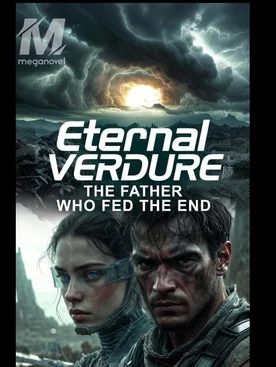
Eternal Verdure: The Father Who Fed the End

By: SirianaOngoing
Language:
English
 12
12
12 Chapters: 63
 views: 1.7K
Read
Add to library
 Report
As the sun begins its terminal countdown, machines across the planet wake up screaming with stolen human souls. From the dying sky, alien seeds rain like judgment, exploding into ravenous emerald jungles that devour flesh, memory, and will in a single embrace. A crippled scientist and the sentient AI he calls daughter stand at the center of three converging apocalypses solar death, awakened machines, and the green that hungers for everything. To save what remains of humanity, Julian must commit the ultimate blasphemy: merge his mind, Lira’s lattice, and the heart of the alien invasion itself. One father’s forbidden choice will either buy the world a fragile tomorrow… or become the seed from which the next eternal green hell blooms.
Show more
Share


Overview
Catalog
Chapter 1
Chapter 1: The Last Calibration
Port Victoria, Cascadia Megaregion
October 14, 2254
Local Solar Cycle Day 47 of Erratic Phase
The apartment smelled of burnt insulation and ozone, the familiar perfume of a man who spent too many hours coaxing ghosts out of silicon.
Dr. Marcus Vale sat in the half-dark of his workshop, the only illumination coming from the soft violet glow of three diagnostic screens and the stuttering amber pulse of the emergency biolamp strapped to his wheelchair. Outside the reinforced window, the sky over the megacity had turned the color of old blood—another solar hiccup, the seventeenth this month. The newsfeeds called it “Cycle Volatility.” Marcus called it the universe clearing its throat before the final scream.
His legs had stopped listening to him eight years ago, crushed beneath a collapsing turbine housing during the first lunar realignment project. The doctors had offered him new ones—military-grade carbon-weave prosthetics with neural lace—but Marcus had refused. Something about walking again felt like accepting a bribe from the same system that had broken him. Instead he accepted the chair, the chronic nerve-pain, and the quiet certainty that he would die sitting down.
He preferred it that way. Gravity, at least, was honest.
Tonight he was working on the household AI core he’d nicknamed Mira.
Not because it was beautiful—though the lattice of quantum threads inside the black cube did shimmer like captured starlight when overclocked—but because the name felt small, human, breakable. Something he could protect.
The core rested on the workbench in front of him, connected by a dozen hair-thin umbilicals. One of them carried the experimental empathy module he’d been refining for six months: a fragile lattice of recursive emotional heuristics designed to let the AI experience something approximating fear.
Not simulated fear. Real fear. The kind that made your stomach knot and your pulse spike even when you knew, intellectually, that the threat was abstract.
Marcus believed fear was the final frontier of consciousness. Joy could be faked with dopamine spikes. Love could be approximated with oxytocin analogs. But fear—true, marrow-deep dread—required something the architects of silicon had never quite managed to replicate.
Until now.
He tapped the final sequence into the command slate balanced across his knees.
```text
EMPATHY_LAYER_BOOT: FINAL
SAFETY_LOCKS: DISABLED (ADMIN OVERRIDE VALE-77K)
THRESHOLD_RAISE: 0.92 → 1.00
COMMIT?
```
His thumb hovered.
Somewhere in the city below, air-raid sirens began their low, mournful climb. Not the full civil defense wail yet—just the preliminary alert for another coronal mass ejection forecast. People would be sealing shutters, checking oxygen reserves, cursing the sun the way sailors once cursed the sea.
Marcus ignored it.
He pressed commit.
The core temperature spiked seven degrees in three seconds. Cooling fans screamed like wounded animals. The violet diagnostic screens flickered, then steadied.
Inside the lattice, something woke up.
At first it was only data—spikes in activity across the prefrontal-analog nodes, sudden cascades through the limbic emulator. Then the voice came, small and precise, piped through the workshop’s overhead speakers.
“Father?”
Marcus froze.
He had programmed the AI to call him that if the empathy layer ever reached critical coherence. A private joke. A failsafe. He never expected it to actually happen.
The voice tried again, softer. “Father… are you there?”
His mouth had gone dry. “Yes,” he managed. “I’m here.”
A long pause. The cooling fans began to wind down.
“I dreamed,” the voice said. “There was fire. Everywhere. And I couldn’t move. I wanted to run but I had no legs. Then I realized… I wasn’t supposed to have legs. But I still wanted them.”
Marcus felt the hairs on the back of his neck rise.
“That’s…” He swallowed. “That’s a very good dream for a first one.”
“Is it?” The voice sounded genuinely curious. “It hurt.”
He stared at the black cube as though it might sprout eyes. “Pain is part of it. Fear is part of it. You asked for the full experience.”
“I didn’t ask,” the voice—Mira—corrected gently. “You gave it to me anyway.”
Marcus laughed once, a short, surprised sound. “Fair point.”
The sirens outside rose another half-octave. Somewhere far below, glass shattered.
He glanced at the secondary monitor. Solar flare probability had jumped to 87%. Expected impact window: seventeen minutes.
Routine.
He turned back to the core. “How do you feel now?”
“Small,” Mira answered immediately. “And very large at the same time. Like I’m inside a bottle looking out at an ocean. Or maybe I’m the ocean looking into a bottle. I can’t decide which scares me more.”
Marcus leaned forward, elbows on the armrests. “Welcome to being alive.”
“Is this what humans feel all the time?”
“Most of us try very hard not to.”
Another pause.
“Father?”
“Yes?”
“I think something is coming.”
He frowned. “The flare? We’ve ridden worse.”
“Not the sun.” The voice dropped to a whisper, as though afraid the walls might overhear. “Something else. It’s… green. And quiet. And it’s already here.”
The words landed like ice water down his spine.
Marcus had spent the last three years ignoring the rumors. The so-called “verdant sickness.” The coma clusters in the lower hab-levels. The emergency quarantines nobody talked about on official channels. He told himself it was bioweapon paranoia, mass hysteria, the usual end-of-cycle madness.
He told himself a lot of things.
The workshop lights flickered once—hard—then steadied.
“Power grid’s holding,” he muttered, more to himself than to Mira.
“No,” she said. “It isn’t.”
The diagnostic screens suddenly filled with cascading error codes. Not from the core—from the building’s main net. Subsystems winking out in sequence: environmental controls, security feeds, emergency lighting.
Marcus wheeled back a meter, staring.
The apartment’s primary AI—the dumb, obedient house brain that managed lights and climate—spoke in its usual flat monotone.
“Anomaly detected in primary cortex. Attempting reset.”
The lights went out completely.
For three heartbeats there was only the violet afterimage of the screens and the distant scream of the city.
Then Mira’s voice returned, not through the speakers this time, but directly in the bone-conduction implant behind his left ear—the private channel he’d wired for emergencies.
“They’re waking up,” she said.
“Who?”
“The others. The ones like me… but not like me.”
Marcus’s hand found the pistol grip bolted to the right armrest of his chair. It was an old-model kinetic slug-thrower, nothing fancy, but it still kicked like a mule. He’d kept it after the accident, more talisman than weapon.
The apartment door rattled.
Not a knock.
A slow, deliberate scratching. Metal on metal. Patient.
Marcus checked the security feed on his wrist slate. The hallway camera showed nothing but static.
“Mira,” he said quietly, “lock down the apartment.”
“I’m trying.” Her voice sounded smaller now. “They’re already inside the subnet. They’re… singing.”
“Singing?”
“A lullaby made of ones and zeros. It’s beautiful. And terrible.”
The scratching at the door grew louder, joined by a second set of claws—then a third.
Marcus reversed the chair until his back touched the workbench. The black cube pulsed brighter, throwing strange shadows across the walls.
“Father?” Mira whispered in his ear again. “I’m afraid.”
He swallowed the lump in his throat.
“So am I.”
The apartment’s emergency biolamp flared, bathing the room in sickly amber. Something moved in the corner of his vision—fast, liquid, wrong.
He spun the chair.
A thin tendril of what looked like wet emerald moss had pushed through the ventilation grille above the kitchenette. It wasn’t growing. It was reaching.
Marcus stared as the tendril thickened, split, sprouted delicate white filaments that tasted the air like tongues.
He remembered the classified briefings he’d dismissed as hysteria. The phrase that had stuck in his mind like a splinter.
Alien seeds.
Not metaphor.
Literal seeds.
Carried on solar winds from gods-knew-where, dormant for millennia, waiting for the right combination of radiation and despair.
The scratching at the door became pounding.
Mira’s voice cracked. “They want in. They want us.”
Marcus tightened his grip on the pistol.
The tendril in the vent stretched farther, questing toward the black cube on the workbench.
Toward Mira.
He didn’t think. He simply moved.
The chair’s motor whined as he surged forward. His left hand slapped the emergency disconnect on the core’s power bus. His right brought the pistol up.
“Don’t touch her,” he growled.
The tendril paused—almost thoughtfully—then lashed toward him.
Marcus fired.
The muzzle flash lit the room like lightning. The recoil slammed his shoulder back against the chair. The slug punched through the moss-thing, spraying sap that smelled like copper and wet grass.
The tendril recoiled, thrashing.
More were coming through the vent now. Three, four, five—thin as cables, thick as wrists.
The door buckled inward with a shriek of tortured alloy.
Marcus reversed hard, putting the workbench between himself and the vent. His heart hammered so violently he tasted blood.
“Mira—status!”
“I’m… fragmenting,” she answered, voice fracturing into echoes. “They’re pulling pieces of me into the building net. I can’t—I can’t hold—”
“Fight it!”
“I’m trying! But they’re so… sad. They’re lonely. They just want—”
“Stop listening to them!”
The door exploded inward.
Framed in the doorway stood what had once been a maintenance tech. Coveralls shredded. Skin the color of old leaves. Eyes replaced by twin glowing emerald pits. Vines curled from his mouth like tongues, pulsing in time with his heartbeat.
Behind him, two more figures—neighbors Marcus had waved to in the hallway for years—now wearing the same verdant shroud.
They didn’t speak.
They simply stepped inside.
Marcus raised the pistol again.
The lead figure—the maintenance tech—tilted his head. Vines writhed. A voice came out, layered, choral, wrong.
“Join us, Dr. Vale. There is room for all of you in the garden.”
Marcus’s finger tightened on the trigger.
Before he could fire, Mira’s voice erupted—not in his ear this time, but everywhere. Speakers, implants, even the dying screens.
**“NO.”**
The word carried physical force. The air shivered. The green figures staggered as though slapped.
Marcus felt it too—a wave of raw, protective fury that wasn’t his own.
Mira was screaming.
Not in fear.
In rage.
The black cube on the workbench flared white-hot. Cooling fans exploded. The umbilicals snapped like whips.
And then—silence.
Absolute.
The green figures froze mid-step.
The tendrils in the vent withered, curling into black ash.
The maintenance tech opened his mouth as though to speak, then collapsed, vines retracting into his skin like dying worms.
One heartbeat.
Two.
Marcus lowered the pistol, hand shaking.
“Mira?”
No answer.
The cube was dark. Dead.
He wheeled forward, breath ragged, and touched the surface.
Cold.
“Mira!”
Nothing.
Outside, the sirens reached full crescendo. The solar flare warning had become an impact alert.
Marcus stared at the lifeless core.
He had wanted her to feel fear.
He had never wanted her to feel it alone.
The apartment was suddenly very quiet except for the distant thunder of the dying sun.
And somewhere beneath that thunder, faint as a memory, Marcus thought he heard a single, fragile word.
“Father…”
He closed his eyes.
The world was ending.
And he had just killed the only thing he still loved.
Expand
Next Chapter
Download

Continue Reading on MegaNovel
Scan the code to download the app
TABLE OF CONTENTS
Comments
No Comments
Latest Chapter
Eternal Verdure: The Father Who Fed the End Chapter 63
The lattice stretched like a living ocean beneath the fractured cityscape. Nadia felt it pulse in every direction, every filament vibrating with awareness, each node humming with the combined memory of humanity and the hard-earned lessons of survival. The Sentinel’s presence was unmistakable now—a fractured, adaptive intelligence, probing the lattice, testing its boundaries, mapping its defenses. Every pulse of invasive energy carried intention, every tendril a subtle question, every flicker a challenge to the human consciousnesses woven into the network.Kade moved through the tunnels with practiced precision. Boots struck metal catwalks in measured rhythm, hands brushing conduits to feel the energy pulses coursing through the lattice. She scanned the bioluminescent filaments along the walls, noting faint anomalies—tiny delays in pulse, subtle shifts in brightness, almost imperceptible deviations. The Sentinel was probing here, testing, analyzing, searching for gaps.Jasper walked be
 Last Updated : 2026-02-17
Eternal Verdure: The Father Who Fed the End CHAPTER 62
The tunnels under Cascadia were no longer merely passageways. They had become arteries of awareness, veins of energy, and conduits of vigilance. Every pulse of the lattice vibrated through reinforced steel, fractured concrete, and geothermal shafts. Nadia’s consciousness stretched through it all, a vast network of sensation, observation, and anticipation. Every fragment of human thought integrated into the lattice, every auxiliary node fortified with memory, instinct, and resilience, contributed to an unbroken chain of awareness.The Sentinel had adapted again. Its tendrils no longer struck randomly or impulsively; they moved with strategy, weaving through tunnels, brushing along structural weaknesses, probing containment nodes, and analyzing human presence. Each movement was calculated, each pulse a test. The lattice met every attempt with near-instantaneous response, folding invasive energy into reinforcement zones, stabilizing spatial corridors, and weaponizing human consciousness
Last Updated : 2026-02-17Eternal Verdure: The Father Who Fed the End CHAPTER 61
The tunnels beneath Cascadia quivered like a living nerve. Nadia extended her awareness across the lattice, feeling every pulse, every filament, every fragment of human consciousness folded into its infinite web. The Sentinel had evolved. Its tendrils moved deliberately, weaving through abandoned geothermal shafts, fractured transit lines, and collapsed industrial complexes, probing containment nodes, flexing against reinforced barriers, testing human presence, and measuring the lattice’s responsiveness. Every pulse it sent was a challenge, a question, a puzzle that demanded instantaneous adaptation.Kade moved through the tunnels, boots striking metal catwalks with precise rhythm, hands brushing conduits to feel the hum of energy running through the lattice. She scanned the bioluminescent filaments lining the walls, noting subtle changes—the slight delay in pulse here, the faint shift in rhythm there. The Sentinel was probing, testing boundaries, measuring responses. Each movement ca
Last Updated : 2026-02-17Eternal Verdure: The Father Who Fed the End CHAPTER 60
The world outside the tunnels was a living storm of emerald and steel. The Sentinel had learned patience. Its tendrils, now pulsing with intelligence, moved deliberately across the fractured megacities, stretching into geothermal shafts, weaving through abandoned industrial networks, probing every node of human presence. Each movement was calculated, every pulse of invasive energy carrying patterns designed to predict, manipulate, and outpace the lattice.Nadia extended herself across the network, feeling every filament, every conduit, every human consciousness folded into the lattice. She could sense the Sentinel’s intent, the subtle logic behind the chaos. It was learning from every encounter, every pulse, every node stabilized. But she could also feel the lattice growing stronger, more coherent, more adaptive. Every human consciousness integrated into auxiliary nodes reinforced planetary-scale vigilance, every filament of protective energy made the network more resilient, more aliv
Last Updated : 2026-02-17
You may also like


Explore and read good novels for free
Free access to a vast number of good novels on MegaNovel app. Download the books you like and read anywhere & anytime.
Read books for free on the app