

10
1 rating · 1 reviews
The Echo Chamber

By: FefeOngoing
Language:
English
 12
12
12 Chapters: 19
 views: 626
Read
Add to library
 Report
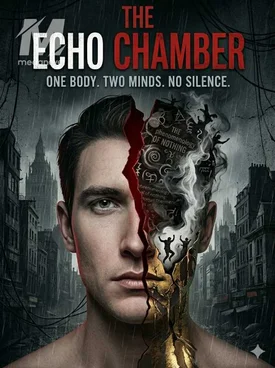
Within the rain-blurred streets of a dystopian metropolis, an obscure governmental division—the Department of Endings—is hidden away under the guise of an archival registry. Dr. Julian Vance, a brilliant but cold cognitive psychiatrist who abandoned medicine after a devastating patient tragedy, is brought back into the fold for a chilling reason. He is tasked with assessing individuals who appear to be living normal lives, but whose clinical evaluations reveal an impossible psychological reality: two distinct, fully functioning consciousnesses fighting for control of a single physical body. What begins as an investigation into an extreme form of mental fracturing quickly turns into a hunt. Alongside Inspector Benedict Cross—a chaotic but sharp detective exiled for chasing conspiracies—Julian discovers that these secondary minds aren't random personalities.
Show more
Share


Overview
Catalog
Chapter 1
Chapter 1
The rain was a constant in that part of the city. Not the cleansing kind that left the streets smelling of wet stone and renewal, but a grey, persistent drizzle that seemed to seep into the bones of the buildings themselves. Dr. Julian Vance stepped out of the transport vehicle and pulled his coat tighter, his eyes scanning the nondescript entrance before him. The sign beside the door read: Central Archival Registry, Annex 4. There was no mention of the Department of Endings anywhere. That was the point. Julian had received the summons that morning. A curt, official request for a cognitive psychiatric assessment. The patient: one Lara Voss, female, thirty-two, no prior history of institutionalization. The referral note was sparse to the point of absurdity, yet it carried the highest clearance codes Julian had ever seen. And at the bottom, a handwritten scrawl: Come in through the archive entrance. Ask for Inspector Cross. Inside, the building smelled of old paper and dust, exactly like a registry should. Fluorescent lights buzzed overhead as a silent clerk led Julian through a labyrinth of filing cabinets, then down a set of stairs that did not appear on any floor plan. The air grew colder. The walls lost their bureaucratic beige and turned to raw concrete. Finally, they reached a heavy steel door. The clerk knocked twice and vanished back the way they had come. The door swung open, revealing a small, cluttered office. A man sat behind a metal desk, his boots propped up on a stack of folders. He looked up with a grin that didn't reach his tired eyes. "Dr. Vance. Finally. I'm Inspector Benedict Cross. Though around here, 'inspector' is a courtesy title. Sit down." Julian remained standing. "I wasn't aware the Department of Endings was a police operation." "It's not," Cross said, swinging his boots to the floor. "I'm attached to the department because no one else wants me, and because I have a habit of noticing things I shouldn't." He stood up, walked to a wall safe, and extracted a thin file. "Like this." He handed the file to Julian. The label read: Subject 7241 – Voss, Lara. Julian opened it. The first page was a medical summary. Physically healthy. No neurological abnormalities. No psychiatric history. A woman who paid her taxes, worked in textile design, and lived alone in a modest apartment. By every objective measure, an unremarkable life. "Turn the page," Cross said softly. Julian turned. What he saw stopped his breath. Two psychological profiles. Not one with a dissociative subcategory, but two separate, complete profiles, written as if describing two entirely different people occupying a single name. The first profile described Lara Voss: timid, emotionally coherent, attached to her past and her identity. The second profile described something else. Something that called itself the Weaver. It had its own memories, its own voice patterns, its own chillingly articulate worldview. And yet, it resided in the same physical body as Lara Voss. "This is impossible," Julian murmured. "That's what the last three doctors said," Cross replied. "They all quit within a week. But they didn't have what you have." Julian looked up sharply. "And what's that?" Cross tilted his head. "A file that's been sealed for six years. A patient you lost. A patient who had exactly the same condition." Julian felt the blood drain from his face. He had never spoken of that case. Not since the inquiry. Not since the silence he had wrapped around himself like a shroud. Cross handed him a keycard. "Your office is down the hall. The patient arrives in two hours. I suggest you read the file. All of it." Julian stood motionless, the file heavy in his hand. Outside, beyond the concrete walls, the rain continued to fall. And somewhere deep in the building, a woman with two minds was waiting.
Expand
Next Chapter
Download

Continue Reading on MegaNovel
Scan the code to download the app
TABLE OF CONTENTS
Latest Chapter
The Echo Chamber Chapter 19
Six months later, Julian sat alone in a small café in the lower districts, watching the rain trace silver lines down the window. The café was quiet, nearly empty, the kind of place where the owner knew your name but never asked questions. He had been coming here once a week since the Department of Endings closed, ordering the same thing each time. The waitress, an older woman with tired eyes and a steady hand, set a small porcelain cup on his table. White tea. Steam curled upward, carrying a faint scent of jasmine and something earthier beneath. Julian nodded his thanks. The city outside was the same as it had always been. Grey towers, electric advertisements flickering in the mist, the constant hum of a million lives pressing against the damp air. And yet, something had changed. He could feel it in the stillness of the café, in the slow rhythm of his own breath. He was not the same man who had first walked into the Department of Endings, clutching a file on a woman with two minds.
 Last Updated : 2026-06-06
The Echo Chamber Chapter 18
They sealed the entrance to the old subway station with concrete. Officially, the collapse was a structural failure — aging infrastructure, heavy rain, nothing more. The city’s upper levels barely registered the event. A minor footnote in a municipal report. The Department of Endings was quietly disbanded within the month. Director Anya Kell vanished before the investigation could begin. Her office was empty, her files burned, her name erased from every registry. The hidden archive beneath the building was flooded with industrial sealant, its contents permanently entombed. Julian watched the cleanup crews from a distance and said nothing. There was no justice to be found in official channels. The Loom had been woven into the government’s fabric for too long. He returned to his private practice on a grey, rainless morning — the first dry day the city had seen in weeks. The clinic was exactly as he had left it: a modest office in a quiet district, shelves lined with textbooks and journ
Last Updated : 2026-06-06The Echo Chamber Chapter 17
The humming beneath the chamber grew louder, a low vibration that Julian felt in his teeth. Somewhere below the tapestries and warm lamps, the original machinery of the Loom was waking. The Weaver’s smile had vanished entirely. The Cartographer’s ink-stained hands curled into fists. The community of threads stood motionless, watching. “You misunderstand your position,” the Weaver said, Lara’s voice hardening into something ancient and unyielding. “You are not here to end the pattern. You are here because the pattern demands you. The Keeper is already stirring. Refuse us, and we will force the integration. It will be painful. For you, and for her.” She gestured, and two of the newer threads dragged Lara’s body forward — the body she still inhabited. Her eyes flickered between pale green terror and the Weaver’s cold dominance. The real Lara surfaced for a heartbeat, her voice a cracked whisper. “Dr. Vance... please...” Julian stepped forward, but Cross was faster. He moved past Julian
Last Updated : 2026-06-06The Echo Chamber Chapter 16
The coordinates led them beneath the oldest part of the city, to a place that did not appear on any map. A forgotten subway station, sealed decades ago, its entrance hidden behind a collapsed warehouse. Cross pried open the rusted gate with a crowbar, his injured arm now bound tightly against his chest. Julian carried nothing but the numbers burned into his mind and the presence of the Keeper humming just beneath his thoughts. The stairs descended into darkness, then into light. At the bottom, the tunnel opened into a vast chamber that had been transformed. The original tile walls were covered with woven tapestries, threads of every color interlacing into patterns that seemed to shift as Julian looked at them. Soft lamps hung from the ceiling, casting warm light over communal tables, shelves of books, and plants growing in repurposed containers. It was not a laboratory or a prison. It was a home. And they were waiting. Six figures stood in a loose semicircle at the center of the cha
Last Updated : 2026-06-06
You may also like


related novels
Explore and read good novels for free
Free access to a vast number of good novels on MegaNovel app. Download the books you like and read anywhere & anytime.
Read books for free on the app
Fefe
Good, keep going