


Not enough ratings
The Candle That Refused the Dark

By: Joy Mema Ongoing
Language:
English
 16
16
16 Chapters: 7
 views: 905
Read
Add to library
 Report
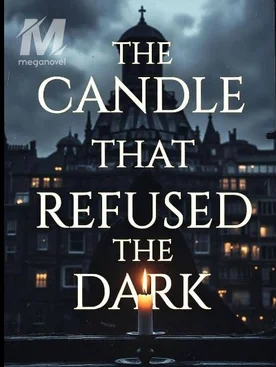
Every January 11th the Skeleton Tower waits. A photographer steps inside chasing whispers. A candle burns. A city holds its breath. Behind the glass is something older than the Thames, patient, hungry, and smiling with too many mouths. One flame stands between London and the drowning. One choice stands between mercy and eternity. And once you light it… you never truly leave.
Show more
Share


Overview
Catalog
Chapter 1
Chapter 2::The Hour That Refused to End
London never truly slept, not even on a bitter January night in 2026.
At 11:47 p.m. on Saturday the 11th, the city pulsed with its usual restless energy. Black cabs hissed past wet pavements, their yellow lights cutting through the rain like search beams. Late-night Deliveroo riders leaned into the wind on electric bikes, high-vis jackets glowing under sodium streetlamps. Somewhere near King’s Cross a busker played a mournful saxophone riff that drifted up through the hiss of tyres on wet tarmac. The rain had started around seven—first polite, then spiteful—turning the streets into black glass that reflected the neon of late-opening chicken shops, 24-hour newsagents, and the occasional glowing blue sign of a Pret that had forgotten to close.
James Carter walked through it with the particular exhaustion of someone who had long ago stopped expecting the weather to be kind.
Thirty-two years old. Just under six foot. Dark brown hair beginning to thin at the temples, though he still refused to acknowledge it. A faint scar above his left eyebrow from a school rugby tackle he’d never quite won. A charcoal wool overcoat that had once been expensive but was now fraying at the cuffs. A battered Nikon Z6ii slung across his shoulder beneath a rain cover he’d bought off eBay from someone who claimed it had once been used by a Guardian photographer.
He wasn’t wealthy. He wasn’t destitute. He lived in the uncomfortable middle ground where rent ate most of his freelance income, where hope still flickered faintly behind the daily grind of stock shots, corporate headshots, and the occasional music festival pass that barely covered his Oyster card top-up.
Tonight he was chasing a whisper.
The text had arrived at 9:14 p.m. from a contact saved only as “Dave Security”:
Mate, something’s off at the old NatWest building on Canary Wharf approach. The one they call the Skeleton Tower. Lights on upper floors. No generator hum. And… voices. Like people arguing but no one’s there. I’m not staying. If you want shots, get here quick. I’m off at 11.
James had stared at the message for almost ten minutes, thumb hovering over the reply button.
He knew the building. Every London-based freelancer with a taste for urban exploration knew it. Thirty-four storeys of unfinished ambition, abandoned mid-construction after the 2008 crash when the developer’s funding evaporated overnight. The concrete skeleton had stood on the edge of the Isle of Dogs for nearly two decades collecting graffiti, urban explorers, pigeons, and increasingly wild stories. People said it was haunted. People said the upper floors were used for private raves that ended in disappearances. People said if you reached the twenty-ninth floor at midnight you could hear the Thames running backwards.
James didn’t believe in ghosts.
But he believed in engagement. A strong set of atmospheric long-exposures could sell to Time Out, The Independent, maybe even a Getty contributor if he got the metadata right. Worst case, they’d do numbers on his I*******m and buy him another month of breathing room on the rent.
So he’d left his one-bed flat in Stratford, caught the Jubilee line to Canary Wharf, then walked the last fifteen minutes through driving rain, collar up, hands deep in pockets.
11:58 p.m.
The perimeter hoarding was padlocked, but the chain had been cut months ago and never properly replaced. A gap just wide enough for one person. James slipped through, feeling the cold metal teeth catch on the hem of his coat.
Inside the ground floor the air changed immediately. Not just colder denser. Like stepping into a room that had been sealed for years. His torch beam caught dust motes hanging in the air, moving with unnatural slowness, as if time itself had thickened.
He crossed what would have been the lobby. Shattered safety glass crunched under his boots. Faded signage still clung to the walls in ghost lettering: NATWEST – FUTURE BRANCH (CONSTRUCTION SUSPENDED). The escalators had never been installed; instead a wide concrete staircase curled upward into darkness like the inside of a nautilus.
James started climbing.
By the fifth floor his calves burned. By the eighth his breathing was loud in his own ears. The rain hammered the exterior cladding like distant gunfire. Far below, a siren wailed once, then faded.
On the tenth-floor landing he stopped.
He heard it.
Not wind through broken windows. Not pigeons. Not his own pulse echoing off the concrete.
Whispers.
They came from everywhere and nowhere at once. Layered. Overlapping. A soft, urgent choir that never quite formed full sentences but somehow still managed to sound like desperate pleading.
“…not yet…”
“…he has to see…”
“…the loop is fracturing…”
“…don’t let him walk away…”
James’s skin tightened. He told himself it was just strange acoustics—sound bouncing off unfinished walls. He told himself he’d heard worse in dodgy Airbnbs in Dalston.
But he didn’t believe it.
He kept climbing.
On the fifteenth floor the whispers grew louder, sharper. Individual voices began to separate from the murmur.
A woman’s voice, low and frightened: “We tried the lower levels last time. It got worse.”
An older man, raspy: “He has to choose. We can’t force it again.”
Another voice his own voice sharp and angry: “I’m not doing this forever!”
James froze on the landing.
That last voice had been unmistakably his. Same slight London accent. Same habit of biting off the ends of words when he was furious.
He swept the torch around. Empty corridors. Open doorways leading into dark rooms full of dangling cables and broken plasterboard.
Nothing.
He kept going.
By the time he reached the twenty-second floor the whispers were so loud they pressed against the inside of his skull like fingers.
He stepped into a wide, open space that must have been intended as a prestige executive suite. Floor-to-ceiling glass on three sides, most of it still intact. Rain streaked down the windows in fast silver rivers. Pale moonlight almost blue spilled across the bare concrete floor.
In the centre of the room stood a perfect circle of white candles.
They were burning.
Perfectly still flames. No flicker. No drip of wax despite how long they must have been alight. Thirty-two candles. One for each year of his life, he realised with a sick jolt.
He took three steps forward.
The old industrial clock on the far wall somehow still ticking after all these years began to chime midnight.
Twelve slow, deep tolls that vibrated through the concrete.
With the twelfth chime, the whispers stopped.
The silence was louder than any sound.
Then, from the shadows at the edge of the candlelight, someone spoke.
“James.”
His own voice. But older. Gravel in the throat. Tired in a way thirty-two should never be.
He turned.
There, perhaps ten metres away, stood… him.
Same height. Same build. Same charcoal overcoat—though this one was torn at the left shoulder and stained with something dark that could have been blood or rain-mixed soot. Hair shorter, threaded with grey. A thin vertical scar through the left eyebrow that James definitely didn’t have.
The older James gave a thin, weary smile. Not kind. Just tired.
“You’re early,” the older version said. “That’s new.”
James’s mouth was suddenly dry. “Who the hell are you?”
“I’m the version of you that’s done this seventeen times already.” The older man stepped fully into the candlelight. His eyes were bloodshot, shadowed. “And I’m begging you—don’t make the same mistake the rest of us did.”
More figures stepped out of the darkness around the room’s edges, as though they’d always been waiting there. Dozens of them. All James. Some younger—barely twenty-five, eyes still bright with reckless hope. Some older—fifty, sixty, shoulders stooped, hands trembling. One version had both arms in casts. Another had ritual scars carved across his scalp. One wore a hospital gown and clutched an IV stand that wasn’t connected to anything.
They all watched the living, breathing thirty-two-year-old James standing frozen in the rain-scented darkness.
The oldest one spoke. Voice cracked like old leather.
“This building isn’t abandoned. It never really was. It’s a machine. A very old, very patient machine. And we’ve been trapped inside its cycle since the night you first decided to come here.”
James gave a short, ugly laugh. “This is a prank. Someone paid you lot to scare me. Nice work. You win.”
The hospital-gown version shook his head slowly. “No one paid us. We paid. Over and over. With years. With blood. With people we loved.”
The youngest version the one who looked twenty-five stepped forward, eyes wide and almost feverish.
“It starts tonight. The curse. It’s already moving through the city. People are changing. Teeth. Skin. Eyes. You’ll see it on the news tomorrow if there’s still news tomorrow. We tried to stop it seventeen different ways. Nothing worked. The only thing left is to change the very first choice.”
James felt the floor tremble. Very faint. Like a District line train passing far below.
“What choice?” he asked, hating how small his voice sounded.
The scarred version answered. “Whether to go down to the lower levels. Whether to open the door that’s waiting there. Whether to step through.”
“Through to where?”
No one answered immediately.
Then the oldest version spoke again, almost gently.
“To every possibility that could have been. To every version of London where things went right. Where your parents never died on the M25. Where your sister still answers your calls. Where you never had to pawn your father’s old Tag Heuer to make rent.”
James’s throat closed.
He hadn’t thought about that watch in years.
The building shuddered again harder. Dust sifted from the ceiling. One of the candles guttered and died. The flame didn’t smoke. It simply… vanished.
The oldest James looked at the dead candle with something close to grief.
“We’re running out of loops. This is the seventeenth. If you make the same choice the rest of us did if you walk away tonight the cycle restarts tomorrow. Same rain. Same building. Same night. And another version of you will stand here, listening to us beg.”
James looked around at the circle of himself.
Some versions were crying silently.
Some looked furious.
Most just looked exhausted beyond words.
He thought of his flat. The flickering bulb when the power cut in. The half-eaten Domino’s box on the counter. The unanswered WhatsApps from his sister in Manchester. The way he’d told himself for years that tomorrow he’d call her. Tomorrow he’d try harder. Tomorrow he’d leave London.
Tomorrow had never arrived.
And now tomorrow was a machine that devoured time.
He looked down at the circle of candles. Thirty-one flames still burning. One already gone.
“How do I stop it?” he asked.
The scarred version answered. “You go down. You find the door. You choose not to run. And then you pay the price.”
“What price?”
All the versions answered at once, soft and terrible:
“Everything.”
The building groaned a deep, almost living sound. Outside the windows lightning cracked across the sky, illuminating the city for a single frozen heartbeat.
In that flash James saw something impossible.
The skyline had changed.
Towers rose higher than the Shard. Shapes moved between them—too large, too fluid to be drones or helicopters. And above it all, a thin red line like a surgical cut across the clouds.
Then the lightning died and the city snapped back to normal.
James’s heart slammed against his ribs.
He looked at the oldest version of himself.
“If I walk away right now… you all disappear?”
The old man nodded once.
“And tomorrow night another me shows up here. And you start over.”
Another nod.
James exhaled slowly.
He thought of the woman he’d seen last week crying on the escalators at Liverpool Street because her child had been detained by Border Force. He thought of the Deliveroo rider who’d brought him here tonight, smiling despite the rain, saying “Stay dry, mate” when James over-tipped. He thought of the way London kept breathing even when it bled.
He thought of how tired he was of being afraid of tomorrow.
“Show me the stairs,” he said.
The versions of himself parted like water.
A doorway James had not noticed before opened in the far wall. Beyond it, a staircase spiralled downward clean, impossibly smooth, lit by a faint blue glow that came from nowhere.
The oldest James stepped aside.
“Last chance,” he said quietly. “Run. Live whatever years you have left before the curse catches everyone. We won’t judge you.”
James looked at him at every version of himself and saw the same thing in every pair of eyes.
Regret.
Not for what they had done.
Regret for what they had failed to do.
He took the first step down.
Then the second.
Behind him, the candles began to go out one by one.
The whispers returned fainter now, almost grateful.
The staircase descended.
And somewhere beneath the Skeleton Tower, in a room that had waited almost two decades for someone brave enough or foolish enough to enter it, a door waited.
A door that led not out of London.
But deeper in.
Expand
Next Chapter
Download

Continue Reading on MegaNovel
Scan the code to download the app
TABLE OF CONTENTS
Comments
No Comments
Latest Chapter
The Candle That Refused the Dark Chapter 7: Shatter Point
The candle flame on the twenty-ninth floor burned with unnatural steadiness, a small yellow spear refusing to bow to the drafts that should have existed in an unfinished building open to the elements on three sides.Freya Malik stood five metres from it, camera still recording, lens pointed at the window.The glass had become something alive.It no longer merely bowed. It breathed.Each slow inward pulse stretched the tempered laminate further, the spiderweb cracks lengthening like roots seeking water in dry earth. The sound was the worst part—not loud, not dramatic, just the quiet, intimate creak of molecules being asked to hold more tension than physics permitted.She kept the viewfinder pressed to her eye because looking directly at the thing pressing from the other side felt too personal, too intimate, like making eye contact with someone who already knew your death date.Through the lens the shape resolved into more detail than she wanted.Not one creature. Not even several.
 Last Updated : 2026-02-12
The Candle That Refused the Dark Chapter 6: The One Who Comes After
January 11, 2027 – 23:42Canary Wharf, London – The Skeleton Tower (still officially “Development Site C-17 – Unsafe – Keep Out”)The rain this year was colder. Thicker. More deliberate, as though the sky had decided that last year’s downpour had been too gentle, too forgiving.Freya Malik walked the last stretch from the Crossrail station with her hood up and the collar of her waxed jacket turned high enough to cover her ears. She was twenty-nine, five-foot-six in the battered Doc Martens she refused to replace, dark hair currently dyed a faded midnight blue that had mostly washed out at the roots. A small scar curved under her left eye from a moped accident in Dalston when she was twenty-one. She carried a beat-up Lowepro backpack containing: - a Sony A7 IV body with a 24-70mm f/2.8 GM - two extra batteries - a small LED torch taped to a monopod - a notebook half-filled with fragmented urban legend notes - a packet of nicotine gum she chewed when the cravings got
Last Updated : 2026-01-28The Candle That Refused the Dark Chapter 5: The Eighteenth Midnight
January 11, 2026 — 00:17 Canary Wharf, LondonThe rain had stopped.Not gradually, not tapering into drizzle. It had simply ceased—as though someone very high up had reached over and turned off the tap.The silence that followed was worse than the storm.No wind. No distant traffic hum from the Westferry Circus roundabout. No late-night Deliveroo moped whining through the side streets. Just the soft drip-drip-drip of water falling from the edges of the unfinished tower onto the cracked tarmac below.And breathing.Not one person breathing. Many.James Carter opened his eyes.He was lying on his back on the cold concrete of what had once been the ground-floor lobby of the Skeleton Tower. The ceiling soared above him—thirty-four storeys of unfinished ambition, now lit by a strange, sourceless silver light that came from nowhere and everywhere at once.He tried to sit up.Every muscle screamed.His coat was gone. His Nikon was gone. His phone—when he patted his pockets—
Last Updated : 2026-01-16The Candle That Refused the Dark Chapter 4: The Weight of Thirty-Two Flames
The blue-lit staircase beneath the perfect house in Larkspur Mews descended in a slow, deliberate spiral, each step feeling slightly softer than the last, as though the stone were breathing.James moved carefully, one hand trailing the smooth wall for balance. The light here was the same cold azure that had guided him down from the Skeleton Tower, but now it pulsed—slow, rhythmic, like the heartbeat of something very old and very patient.He counted the steps this time.One hundred and eight.Exactly one hundred and eight.When the final step arrived, it didn’t announce itself with a landing. The staircase simply flattened out and became floor. He found himself standing at the threshold of a long, low-ceilinged corridor. The walls were lined with mirrors—floor to ceiling, edge to edge. Not ordinary mirrors. These reflected nothing of the corridor itself.Each one showed a different James Carter.Not the versions from the candle circle. These were subtler. More intimate. Snapshots of m
Last Updated : 2026-01-15
You may also like


Explore and read good novels for free
Free access to a vast number of good novels on MegaNovel app. Download the books you like and read anywhere & anytime.
Read books for free on the app