


Not enough ratings
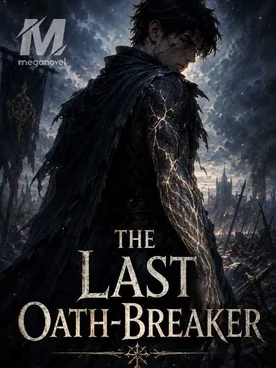
The Last Oath-Breaker

By: Kitty_XOOngoing
Language:
English
 18
18
18 Chapters: 12
 views: 374
Read
Add to library
 Report
In the Solvane Empire, a sworn oath is absolute. Break your word, and the Oathfire kills you — fast, agonizing, and without exception. It is the law beneath every law: soldiers swear to hold their lines, nobles swear to keep the peace, and no one has ever lived to regret breaking a vow. Wren Ashbourne just broke one — in front of forty witnesses, on a collapsing battlefield. He should be dead. He isn't. He tells only one person: General Corvin Drayce, the man who raised him from the age of six, the closest thing to a father he's ever had. Drayce tells him to keep it secret. Trust me. Let me handle it. Wren trusts him completely. Until a scholar of the Order shows him a three-hundred-year-old record — three other men who once survived what should have killed them. All three dead within the year. Every case sealed by the same officer's signature: General C. Drayce. Now Wren has to uncover a forbidden truth buried in his own childhood — a power he never asked for, a mentor who may have built him into something else entirely, and an empire whose oldest law might be the biggest lie of all. He was raised to be a weapon. He's about to find out for whom.
Show more
Share


Overview
Catalog
Chapter 1
What Should Have Killed Him
The mud remembered every oath ever sworn into it — and by dawn, it would remember his.
Wren Ashbourne knelt with the rest of the Thirty-First, water soaking through his trousers, and said the words he'd said a hundred times before, in the voice of a man who had never once considered they might not hold. "On my oath," he said, "I will hold this line until relieved, or until the Oathfire takes me for breaking it." Two hundred voices echoed some version of the same sentence around him, and two hundred small coals kindled at once beneath two hundred ribcages — the binding settling in the way it always did, a warmth like a hand laid flat over the heart. It was meant to feel like reassurance. Nine years in, Wren still wasn't sure if it was. By midmorning, the reassurance had become an accusation. Three times their number came over the ridge before the sun had fully cleared it, and Captain Fell did the math the way she always did — fast, silent, her mouth moving slightly as though counting under her breath. Wren had watched her make that same calculation a hundred times before, in a hundred smaller crises, and had never once seen it end in an order she wasn't allowed to give. "Fall back," she said. "Fall back, that's an—" The word *order* never finished leaving her mouth. There was no flame. That was the cruelty of it, the specific wrongness Wren had never gotten used to in nine years of watching men and women break under an oath's weight — no fire, no light, nothing you could point to and call punishment. Just collapse. A body forgetting, all at once, how to be a body, folding to the ground the way a puppet folds when its strings are cut. Fell was dead before her knees found the mud. Nine years of faultless service had not bought her a single exception to a debt she'd sworn at dawn. The company scattered. Wren understood why, in the cold clinical part of his mind that kept working even as the rest of him went numb — an enemy blade was a mercy compared to your own broken word. At least a blade left room for hope. He didn't run with them. He knelt beside Fell's body for exactly as long as it took to confirm what he already knew, and then some other part of him — colder, faster, already three steps ahead of the fear that should have stopped him — stood and shouted the only order he had any right left to give. "Fall back! I'll hold the gap!" He had sworn, at dawn, to hold this line until relieved or until the fire took him. No one had relieved him. He knew that with total clarity even as he said the words — knew he was choosing, deliberately, with both eyes open, to make a promise he had no possible way of keeping. He turned toward the gap instead of away from it. He ran into it the way you'd run into cold water, breath already caught in his throat in anticipation of the shock. He fought — badly, desperately, the specific ugly fighting of a man who has already decided he's dead and is only trying to make the dying cost something — and somewhere in the chaos of it he understood, with a strange and total peace, that he had broken his oath in front of forty witnesses, and that within the hour, the mud would collect on him the same way it had collected on Fell. The hour came. Then two. The enemy line withdrew for reasons that had nothing to do with him, some larger calculus of a war he wasn't senior enough to see the shape of, and Wren Ashbourne sat alone in a field of the company's dead, waiting. The fire never came. He sat with that absence for a long time — long enough that the blood on his hands went from wet to tacky to a dark, flaking rust — testing it the way you'd test a loose tooth with your tongue, unable to stop returning to the place where something should have hurt and simply, inexplicably, didn't. --- He didn't tell anyone that first day, walking the eleven miles back to camp on legs that by every law he understood should not have still been carrying him. He didn't tell anyone that night either, lying rigid in his tent with one hand pressed flat over his own sternum, searching for a warmth that used to live there and had, without ceremony, without warning, simply stopped. Not faded. Not weakened. Gone, the way a held breath is gone the instant you finally let it out — except Wren had never let anything out. Someone had reached in and taken it from him. He told General Corvin Drayce three days later, in the low lamplight of the command tent, because Drayce was the only person alive who had ever looked at a six-year-old orphan covered in his own parents' blood and decided, on the spot, that the boy was worth keeping. He said all of it — the order, the gap, the fire that should have come and didn't — and watched his general's face for the horror he was braced for. He didn't find horror. He found, for one unguarded fraction of a second before Drayce's expression smoothed back into something careful, an emotion Wren had no name for yet and would spend a long time afterward wishing he'd recognized sooner. Recognition. That was the word. Not surprise at all. *Recognition.* "Say that again," Drayce said, very quietly. "Slowly. Every word, exactly as it happened." Wren said it again. Drayce was silent long enough that the lamp guttered once, twice, before he finally spoke — each word set down with the deliberate care of a man testing ice he already suspected wouldn't hold his weight. "You broke a sworn oath," he said, "in front of forty witnesses, three days ago. And you are sitting across from me right now, whole, breathing, unmarked." "Yes, sir." "Has anyone else seen what you've just shown me? Heard any of it?" "No, sir. I didn't know what I'd have told them." Something in Drayce's shoulders released — a small mechanical loosening, barely visible, the kind of tell Wren had spent thirteen years learning to read the way other men read weather before a storm. He understood it now for what it plainly was: relief. Not relief for Wren's sake. Relief that the secret was still contained. "Good," Drayce said, and the warmth came back into his voice like sunrise. "Good, Wren. You came to me first. That was exactly right." "Sir — what's happening to me?" Drayce crossed the small space between them and set both hands on Wren's shoulders, the same steadying weight he'd offered a grieving child thirteen years ago in a house that still smelled of smoke. For one whole, complete moment, Wren let himself believe — fully, gratefully, the way only a boy raised on this man's certainty could believe — that whatever came next would be survivable simply because Drayce was the one carrying it with him. "I don't know yet," Drayce said. "But I intend to find out, carefully, and on my own terms. Until I do, you will not swear another oath. Not to me, not to the crown, not to anyone, for any reason — not a training vow, not a debt owed to a friend, nothing. We don't yet understand what this costs. I will not have you testing that twice before I understand it once." "Yes, sir." "And Wren." The grip tightened — not painfully, just enough to feel, suddenly, less like comfort and more like something holding a door shut. "You will not speak one word of this to anyone else. Not Isolde Farrow. Not your unit. Not the Order, on pain of whatever they'd call it — heresy, blasphemy, I don't care what word they'd reach for. Do you understand what happens to a man who's discovered to be carrying something they'd call a weapon?" "They'd take it from him. However they had to." "They would take *you*," Drayce said, and something in his voice, for just a moment, sounded almost like grief arriving early for a death that hadn't happened yet. "I have already lost one person I could not protect in time. I am not going to lose a second." Wren nodded, and thirteen years of unbroken trust folded the last of his fear into something that felt, at the time, almost exactly like safety. He did not see — because the lamp had guttered low, and half of Drayce's face had already gone to shadow — the particular stillness that crossed the general's expression the moment Wren looked away. A man doing quiet, careful arithmetic of his own. A man watching the boy he had raised for exactly this possibility finally, finally arrive at the answer he had spent thirteen patient years waiting for him to find. And beneath the desk, out of the lamplight, out of sight of a boy still trembling with gratitude — Drayce's hand had already curled, unconsciously, around a small sealed letter he had been carrying, unopened, for three days. Waiting, it seemed, for exactly this conversation to happen before he decided what to do with it. --- Isolde Farrow found him three days after that, in the Order's scriptorium, hunched over a restricted volume of oath theory he had no clearance whatsoever to be holding. "You're not supposed to be in here." She set down an armful of scrolls without any particular hurry, the way a person moves when they've already decided how the conversation is going to go. "And you're certainly not supposed to be reading *that* one." "I know." He didn't close the book. "I need to understand something. I don't know who else I can ask." She studied him — the particular, unhurried attention of a scholar who had spent years learning exactly what a frightened man tries to hide, and how badly he usually fails at hiding it. "You survived something," she said slowly. "Recently. It's been sitting on your face for days, and I've been deciding whether it's my business to ask about it." "It isn't." "Then why are you sitting in my scriptorium, reading the one book in this archive that only makes sense to someone who's broken an oath and lived to regret understanding why?" Wren went very still. Isolde leaned back against the table, arms folded, her voice gentling even as her eyes stayed exactly as sharp. "Four years, Wren. Four years I've spent cataloguing every recorded oath violation in this Order's entire archive. There are exactly three cases in three hundred years where the Oathfire didn't take the breaker. All three quietly sealed the same week they were discovered — buried so completely that half the senior scholars here don't know they exist." She held his gaze, steady, unflinching. "I don't know yet what happened to you three days ago. But I know precisely what the look on your face means. You're the fourth." "If you're right," Wren said, quiet, the words costing him something to say aloud, "what happens to me?" "I don't know that either." She turned, finally, and pulled the archive ledger from beneath the scrolls she'd been carrying — as though she'd known, walking in, exactly which conversation this was going to become. "But I know what happened to the other three, if this record is telling the truth. None of them died of the Oathfire. They died of something else entirely — within the year, every single time. And every one of those deaths was investigated and formally sealed by the same officer." She opened the ledger to a page worn soft at the corner from years of returning to it, and tapped one line of careful, formal handwriting at the bottom. *Case reviewed and sealed by order of General C. Drayce.* Wren stared at the name until the letters stopped resolving into anything he could read, the room narrowing around that single line of ink until nothing else in the scriptorium seemed to exist at all. Somewhere above them, in a command tent lit by one low, patient lamp, the man who had raised him was breaking a seal on a letter he'd been carrying for three days — and reading, for the first time, four words that would decide everything that happened next.Expand
Next Chapter
Download

Continue Reading on MegaNovel
Scan the code to download the app
TABLE OF CONTENTS
Comments
No Comments
Latest Chapter
The Last Oath-Breaker What Was Waiting
The letter arrived before they'd even left the village — carried by the same washerwoman who'd told them of Maren's flight, a boy of perhaps ten trailing behind her, clutching a sealed envelope he clearly didn't understand the weight of."Rider left this an hour before you arrived," the boy said, holding it out to Wren with the particular solemnity of a child entrusted with something important. "Said to give it to whoever came asking after the Corvane woman. Said you'd know who it was from."Wren's hands went cold before he'd even broken the seal. He recognized the wax impression pressed into it — the same sigil Drayce wore on his own signet ring, the one Wren had watched catch lamplight a thousand times across thirteen years of dinners, briefings, quiet evenings that had felt, at the time, like family.He opened it there, standing in the doorway of Maren's empty house, Isolde close enough to read over his shoulder.*Wren —**I imagine by now you believe you understand everything. I w
 Last Updated : 2026-08-29
The Last Oath-Breaker The Road Back
They left within the hour, Voss's warning still ringing in Wren's ears, and this time there was no pretense of a soldier's ordinary leave to maintain — no careful performance for anyone watching. He requisitioned two horses from the garrison stables using authority he technically didn't have anymore, and neither the quartermaster nor anyone else standing nearby made any move to stop him. Word had already spread. Whatever he was now, in the eyes of this camp, it was no longer simply *soldier.*"Three days ahead of us," Isolde said, swinging up onto her own horse, voice tight with the same dread coiling in Wren's chest. "If he rode hard, he could already be there.""Then we ride harder."They pushed the horses in a way Wren had never allowed himself to push an animal in nine years of careful, disciplined service — through the night, stopping only when the horses themselves refused to go further, sleeping in short, broken shifts that left him more exhausted waking than he'd been lying do
Last Updated : 2026-08-27The Last Oath-Breaker The Second Signature
They didn't stop moving until dawn, and even then only because Isolde's legs finally gave out beneath her on a stretch of riverbank thick with reeds, and Wren realized, looking at her, that he'd been running on fear alone for six hours and had nearly killed them both doing it."We need to think," she said, breathless, sinking onto a fallen log. "Not run. Think.""I know." He sat across from her, the stolen papers still clutched in one fist like they might vanish if he loosened his grip. "I know, Isolde. I just keep seeing that boot print. Someone was close enough to touch us and chose to walk away instead.""Because walking away told Drayce something running never could have. It told him we're still useful to watch." Isolde pulled her knees up, wrapping her arms around them, and for the first time since he'd met her, Wren saw something in her face that looked less like fear and more like fury. "Voss. Chief Archivist. I've worked under that woman for four years, Wren. I've handed her r
Last Updated : 2026-08-27The Last Oath-Breaker Footsteps Above
Isolde moved first, snatching the lamp and killing its glow against her sleeve, plunging the chamber into the same absolute dark it had kept for thirteen years. Wren caught her arm before she could pull him toward the stair."Wait." His voice was barely a breath. "If that's Drayce's man, he doesn't know we've found this yet. The moment we run, he knows exactly how much we've seen.""And if we don't run, he finds us standing over an open archive with your grandmother's book in your hands."Wren was already moving, not toward the stair but toward the shelf Isolde had found — the sealed cases marked with Drayce's own hand. He pulled his knife and cut the twine on the nearest one, working fast in the dark by feel alone."What are you doing—""Taking proof instead of leaving it for him to burn once he knows we've been here." He got the case open, closed his hand around whatever was inside — a folded sheaf of paper, thick, official-feeling — and jammed it into his coat. "Now we run."The fo
Last Updated : 2026-08-27
You may also like


related novels

Explore and read good novels for free
Free access to a vast number of good novels on MegaNovel app. Download the books you like and read anywhere & anytime.
Read books for free on the app